
5 min read
What Is Regenerative Treatment? What Sits Under the Heading
What is regenerative treatment, which approaches does it cover and what limits do they share? A short guide opening up what actually sits beneath the term.
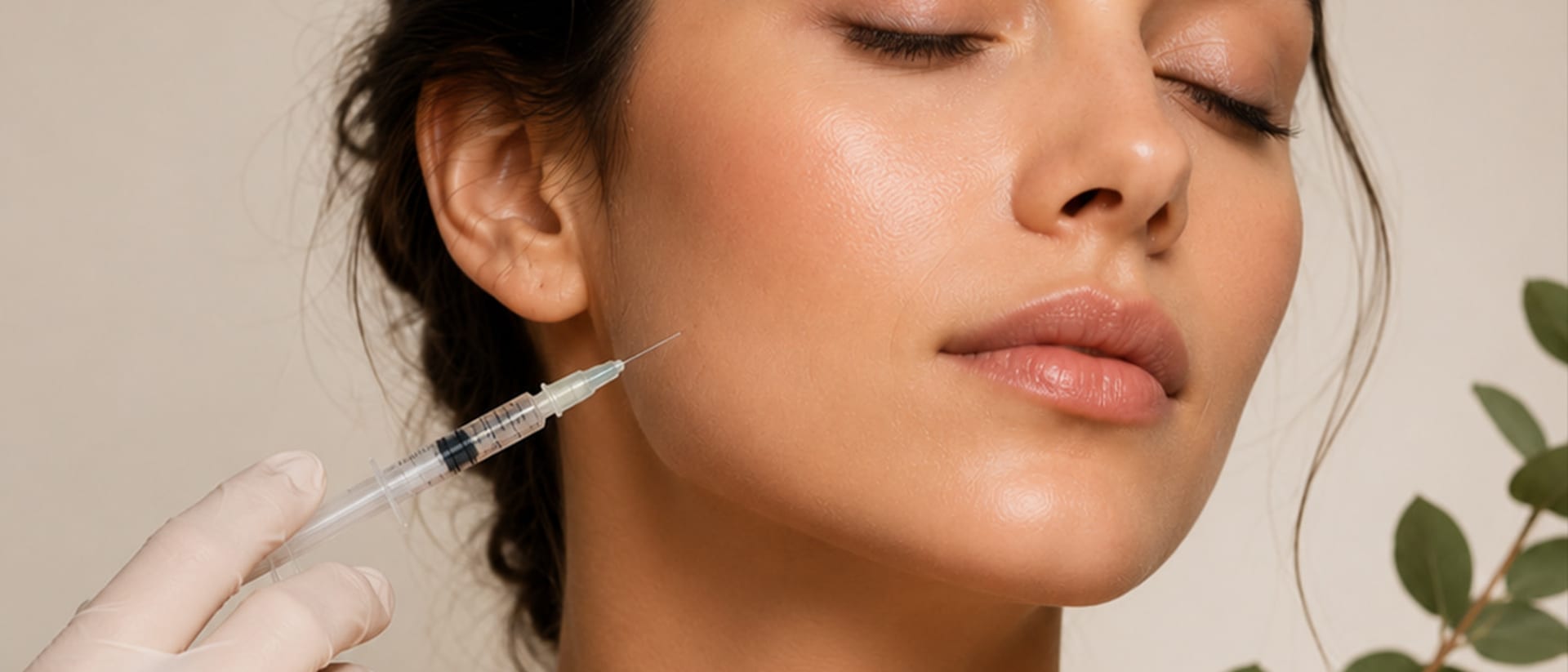
The question of what is regenerative treatment asks about a family of approaches rather than the name of one procedure. What the family shares is aiming to support the tissue's own renewal processes. But the methods beneath it differ and they do not all rest on the same evidence base. This article opens up what sits underneath.
What does the heading describe?
Short answer: The shared idea is this: rather than adding something to the area, support the tissue's own repair and renewal processes. That is where they part company with volume-adding treatments.
That is why how their results read is shared too. The change is gradual and emerges over weeks; no assessment is made on the day of treatment.
The session logic is similar across the family as well. Most approaches are planned as a series rather than a single session.
There is a shared limit too: none of them is a solution for volume loss. Where the source is volume loss the whole family fails to deliver the expected change.
Which approaches sit beneath it?
Treatments containing polynucleotide belong to this family. Because the source is fish they bring an allergy heading with them.
Treatments containing exosomes are the second heading. They are described through the vesicles cells use to send signals; what exosome skin therapy is is covered separately.
Treatments prepared from a person's own blood are discussed under the same heading. That group has been in use longer and sits apart because the source is the person themselves.
They are not all the same thing and do not rest on the same evidence base. Two people saying "I had a regenerative treatment" may be talking about different things.
How solid is the evidence?
Short answer: It is not equal. Some approaches have been in use longer, others are relatively new. The FDA consumer alert notes that products containing stem cells and exosomes are unapproved.
That does not mean the whole family is worthless. What it means is that each approach has its own situation and no single sentence describes them all.
That is why the word "regenerative" is not a marker of quality on its own. Which approach is being used remains a question worth asking; stem cell aesthetics claims is covered separately.
Which complaints does it come up in?
It is considered in people describing a fall in skin quality, dullness, fine lines and a generally tired look.
The scalp is another area where this family is discussed, though skin and hair require different planning.
Which area is being treated also changes the approach. Two methods from the same family can suit different areas differently.
What they share is this: none of them is about filling a hollow. The source is established at examination and the method chosen afterwards.
What limits do they share?
Short answer: A gradual result, an effect that is not permanent and no answer to volume loss — all three apply to the whole family.
The result reads gradually and is not assessed before the series is complete. Someone expecting a fast result struggles in this family.
The effect is not permanent, and that is a shared limit across the family. The response achieved recedes over time and maintenance can come onto the agenda.
The tissue also continues to age independently of the treatment. That is a separate heading from the effect fading and the two should not be confused.
Pregnancy and breastfeeding, active infection in the area and active phases of autoimmune conditions sit among the family's shared limits.
How is the choice made?
At examination the source of the complaint is established first. Where the source is tissue quality the family is on the table.
Where the source is volume loss the family leaves the table and the method is sought under another heading. A method chosen without that distinction is usually the wrong one.
Then which approach fits is considered: area, the person's history, allergy status and previous treatments are weighed together.
Putting two methods that answer the same question on top of one another does not always give a better result; exosomes vs polynucleotides is covered separately. The treatment's own page sits under exosome therapy.
Frequently asked questions
Is regenerative treatment a single procedure? No, it is the name of a family of approaches. Beneath it sit treatments containing polynucleotide, treatments containing exosomes and methods prepared from a person's own blood. They are not all the same and do not rest on the same evidence base; which one is being used is worth asking.
Are they all equally evidenced? No, the evidence base is not equal. Some approaches have been in use longer, others are relatively new. The FDA consumer alert notes that products containing stem cells and exosomes are unapproved; that difference is worth knowing before deciding.
Does it replace filler? It does not. The whole family aims at tissue quality and none of them is used to add volume. Where the source is volume loss they do not deliver the expected change; the distinction is made at examination and always comes before choosing a method.
Is the result permanent? It is not. The response achieved recedes over time and maintenance can come onto the agenda. The tissue also continues to age; that is a separate heading from the effect fading. Separating those two matters for setting the expectation correctly.
If you would like to talk through the source of your complaint and whether this family suits it, the consultation assesses the area by examination.
This article is for general information and is not medical advice. Assessment and treatment decisions follow a medical examination; results vary between individuals.