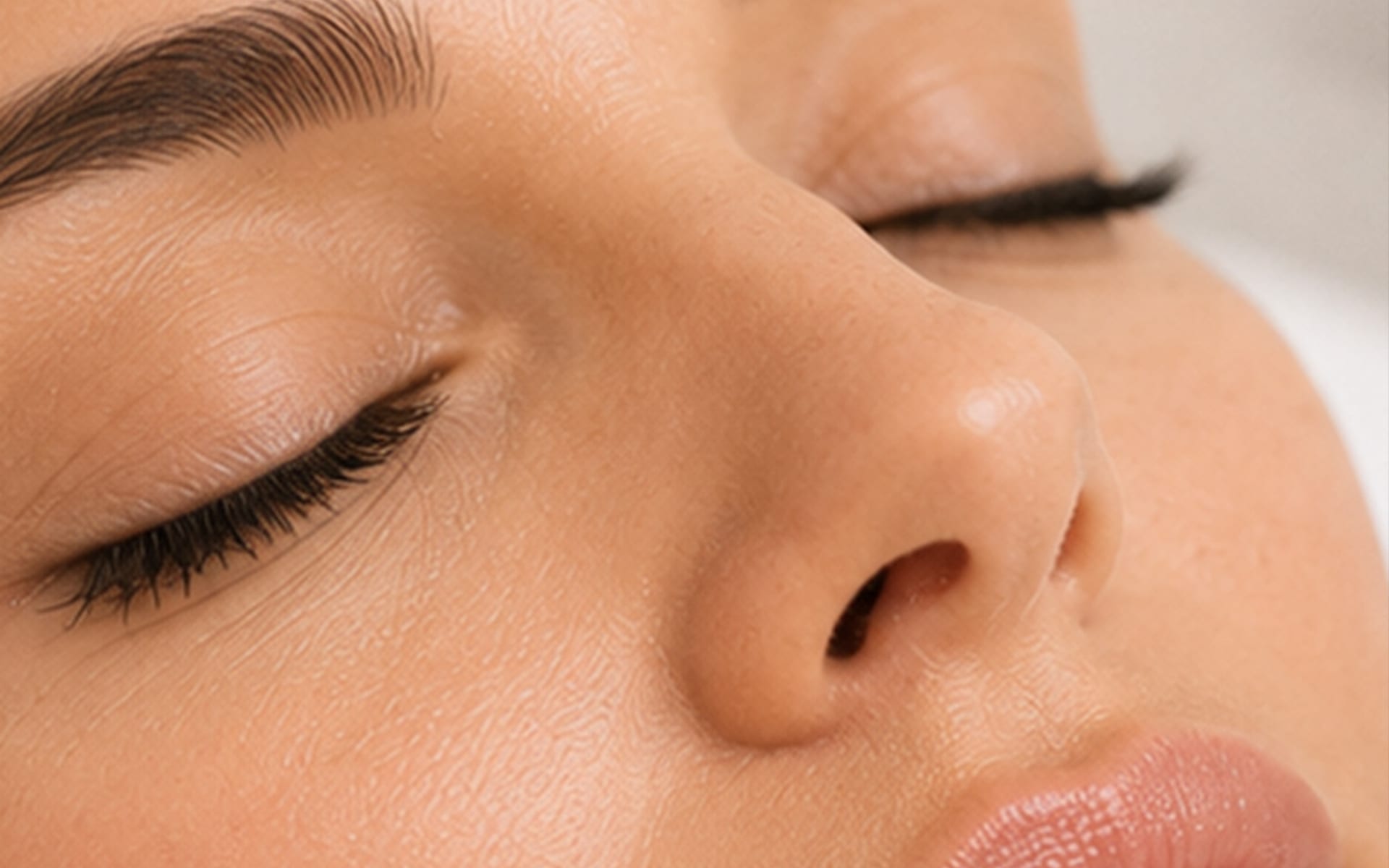
5 min read
Tear Trough and Mid Face: Why They Are Assessed Together
Tear trough and mid face: what is the link, why are they assessed together and how is the plan built? A guide to the subject for anyone weighing it up.
Tear trough and mid face is a pairing most people with an under-eye complaint do not expect. The complaint sits under the eye while the source usually sits a little lower. This article covers why the two areas are assessed together and how the plan follows from that.
What is the tear trough?
Short answer: It is the hollow running from under the eye towards the side of the nose. It is the transition between the fine structure around the eye and the thicker tissue of the cheek, and when that transition becomes marked it shows as a shadow.
The shadow there usually comes from shape rather than colour. Light entering the hollow creates a dark area, and that produces an appearance make-up does not cover.
Being confused with a colour-driven darkness is common for that reason. The two can be present at once and their approaches differ, so the distinction has to be made.
The practical way to tell them apart is changing the light. A darkness driven by colour does not change much with light, while an appearance driven by shadow shifts with its direction.
Where does the link with the mid face come from?
What sharpens that transition is usually the support falling on the cheek side. As the cheek shifts downwards the transition becomes more marked and the shadow deepens.
So the tear trough is not an independent area but a border. When one side of a border changes, the border changes with it.
There is a practical observation that shows the link: if the shadow under the eye lessens when you gently support the cheek upwards with a hand, the source is in the mid face.
Which findings point that way sits in signs of mid face volume loss.
Why does the plan start with the mid face?
Short answer: A treatment placed into the border itself does not address the cause, so the result can be short-lived. Once support is restored, the shadow lessens on its own in most pictures.
That does not mean the under-eye is never touched. In some pictures a further plan is discussed for a shadow that remains after the mid face has been supported.
The order matters for that reason. The mid face is assessed first, the remaining finding is measured, and a second step is planned where warranted.
Why is the under-eye a risky area?
The skin here is the thinnest on the face and the structure beneath leaves very little margin. Excess product becomes visible easily.
The area also holds swelling readily. Product placed in the wrong layer can produce a lasting fullness that becomes marked in the mornings.
A bluish tint is a heading specific to this area too. Light reflecting through thin skin can read as a colour change where product sits close to the surface.
Those three reasons make assessing the mid face before approaching this area directly all the more sensible.
Is the mid face targeted in everyone?
Short answer: No. In some pictures the shadow comes from a structural difference belonging to the area itself, and mid face support does not produce the expected change; the distinction is made at an examination.
A colour-driven darkness is a different heading again. Adding volume does not change the result there and the approach moves to the skin side.
Laxity of the lower eyelid is its own group. Filler alone is not enough in that picture and that needs saying at the outset. Where there is a marked tendency to swelling the decision differs too, since added volume can make that tendency more visible.
How is the decision made?
The assessment weighs how the shadow changes with light, the state of the cheek support, the thickness of the skin and any tendency to swelling.
Photographic assessment is part of that stage. Images taken in different lighting help separate shadow from colour.
Setting a realistic expectation happens here too: the aim is softening the transition and the face reading as more rested, rather than the shadow disappearing. The wider frame sits in what is mid face filler and the mechanism in what causes hollow cheeks; the clinic's framework is on the mid face filler page.
Frequently asked questions
Do I have dark circles or a shadow? The practical way to tell is changing the light. A darkness driven by colour does not change much with light, while an appearance driven by shadow shifts with its direction. The two can be present at once; because their approaches differ, the distinction is made at an examination.
Can I just have filler under the eye? In some pictures yes, but in most the order matters. If what produces the shadow is lost support on the cheek side, a treatment placed straight into the border does not address the cause and the result can be short-lived. The mid face is assessed first, then what remains is measured.
Why is this area considered riskier? The skin is the thinnest on the face and the structure beneath leaves very little margin, so excess product becomes visible easily. The area also holds swelling readily, and product close to the surface can read as a bluish tint. Together those call for careful planning.
The shadow lessens when I push my cheek up, what does that mean? That practical observation suggests the source is largely lost support in the mid face. The definite assessment is still made at an examination, but the finding gives a strong clue about where the plan should start and makes the conversation easier.
If you would like to talk through the source of the appearance under your eye, the consultation reviews the area and the mid face together.
This article is for general information and is not medical advice. Assessment and treatment decisions follow a medical examination; results vary between individuals.