
6 min read
Are Regenerative Treatments Safe?
Regenerative safety explained: how PRP differs from exosomes, the known risks, product authenticity, and an honest look at the evidence.
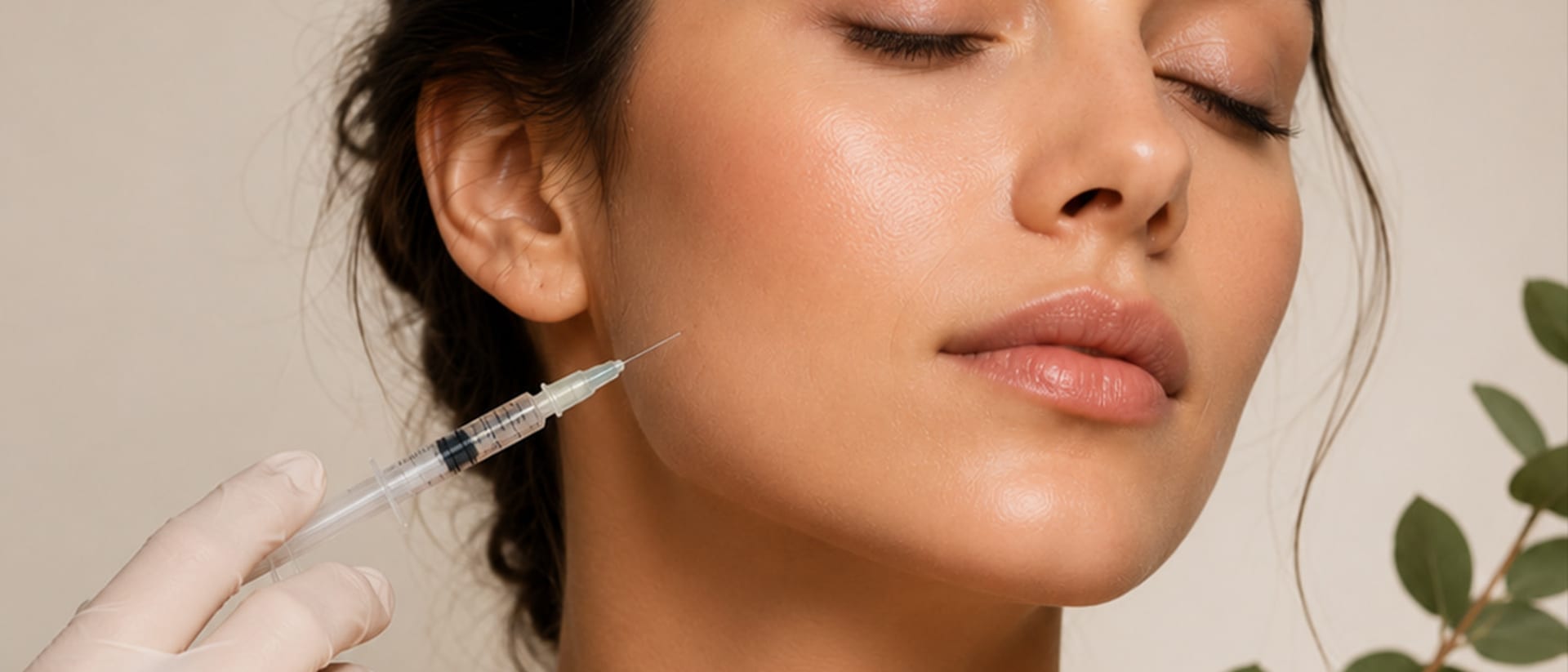
If you are researching regenerative treatments online, you have probably met two opposite messages: clinics promising dramatic renewal, and forums warning you away. Neither helps. Regenerative safety is not a yes-or-no question. It depends on what is being injected, where that product came from, who is holding the syringe, and how mature the science behind that specific treatment really is. Here is an honest look at all four.
Autologous (from your own blood) vs. product-based treatments
"Regenerative" is an umbrella term, not a single treatment. For safety purposes, the most useful line to draw is where the injected material comes from.
- Autologous treatments. PRP is the classic example. Your own blood is drawn, spun in a centrifuge, and the platelet-rich portion is injected back into you. Because nothing foreign enters the body, the risk of allergic or foreign-material reaction is low. The risks that remain are procedural: the blood draw, hygiene, the injection itself.
- Product-based treatments. Exosomes, polynucleotides (often marketed as salmon DNA) and similar products are manufactured in a laboratory and introduced from outside. Here, what is inside the vial — its contents, its manufacturing standard, its storage conditions — becomes a direct safety question.
This is not a ranking. A poorly prepared PRP can be less safe than a properly regulated product. The point is that the questions you should ask change depending on the source.
The known risks
No injection carries zero risk. Any clinic telling you otherwise is either simplifying or not being straight with you. What is realistically on the table:
- Common and temporary: redness, tenderness, mild swelling and bruising at the injection site. These usually settle within a few days.
- Infection: theoretically possible any time the skin barrier is broken. Sterile technique and single-use equipment keep this risk low.
- Allergic or inflammatory reaction: more relevant for externally supplied products than for autologous ones. Uncommon, but possible.
- Not getting the result you hoped for: not a complication, but a realistic outcome. Response to regenerative treatments varies noticeably between individuals.
- Situations where treatment is postponed or declined: active skin infection, certain blood or bleeding disorders, active cancer, pregnancy and breastfeeding, among others. This is assessed during examination, not from a form.
Standards and product authenticity
With product-based regenerative treatments, most of the safety is determined before the needle ever touches your skin. If you are travelling to Istanbul for treatment, you have every right to ask:
- What is the name and manufacturer of the product, and what is its regulatory status here?
- Is the product opened from its sealed packaging in front of me?
- If it requires cold-chain storage, how is that maintained?
- Is the person performing the injection a licensed physician?
Regenerative aesthetics is one of the easiest fields for unregulated products to circulate in. Vials labelled "exosome" or "stem cell" sold online, with no verifiable manufacturer, are a real problem. If nobody can tell you what is inside a product, nobody can predict how your body will react to it.
For autologous treatments, the standard lives in the equipment and technique: closed-system tubes, single-use kits, an appropriate centrifuge, a sterile preparation area. "It's your own blood" is not a shield if the preparation environment is poor.
Being honest about the evidence
Not all regenerative treatments sit at the same level of scientific maturity, and it is worth saying so plainly:
- PRP has been used for years in hair loss and skin quality, and has a comparatively broader body of literature behind it. Even so, the lack of standardization between preparation protocols is still openly debated.
- Polynucleotides (salmon DNA) have accumulated growing data for skin quality and hydration. Promising, but the field is still young.
- Exosomes and stem cell-based approaches, used for aesthetic purposes, remain an emerging and largely investigational area. The laboratory science is genuinely interesting; the long-term human safety and efficacy data are not yet mature enough to speak in certainties.
None of this means "avoid them." It means you should be told, honestly, where on that spectrum your proposed treatment sits. A treatment being new does not make it bad — but it does not justify a promise of guaranteed results either. No physician can guarantee an outcome in regenerative aesthetics. Our broader overview of what regenerative aesthetics is covers the categories in more detail.
Why the physician matters more than the product
In regenerative treatments, the single biggest safety variable is the person treating you, not the vial on the tray. A proper assessment includes:
- A review of your medical history, medications, and any blood thinners.
- An honest discussion of whether a regenerative approach is even the right answer for your concern. Sometimes the correct answer is filler, sometimes it is simply a better skincare routine, and sometimes it is nothing at all.
- Clear expectations and a clear timeline: regenerative results tend to build gradually across sessions rather than appearing after one visit.
- A named physician you can reach if something does not feel right afterwards.
This matters especially if your stay in Istanbul is short: ask who you will speak to after you fly home. The wider framework for medical aesthetics safety applies here too.
Frequently asked questions
Is PRP safer than exosome therapy? They carry different risk profiles rather than different rankings. PRP is prepared from your own blood, so foreign-material reactions are unlikely; its risks are mostly hygiene and technique. With exosomes, product authenticity, manufacturing standards and storage are the deciding factors. Both are generally well tolerated when performed properly, but which one suits you can only be determined through examination.
How should I think about stem cell treatments for aesthetics? As an emerging, still-investigational field. Some clinics present it as more scientifically settled than it is. The right response is to ask exactly what is being injected, what evidence supports it, and what its regulatory status is — and to be cautious if those answers are vague.
How long does it take to look normal again after a regenerative session? For most people, redness and mild swelling settle within a few hours to a few days; bruising, if it occurs, can take a little longer. These are averages and vary by person, by area treated, and by the method used — worth planning for if you have travel booked.
If you would like to understand which approach might suit you, why it is being suggested, and what its realistic risks are, you are welcome to book a consultation.
This content is for informational purposes only and does not replace a medical consultation.