6 min read
Hair Loss Treatment Methods
Hair loss treatment explained: shedding types, root causes, mesotherapy, PRP and exosome options, and what results to realistically expect.

Most people ignore hair loss until the day it suddenly feels urgent: a widening part, a thinning crown, more hair in the shower drain than seems reasonable. If you are researching hair loss treatment, the first thing worth knowing is that "hair loss" is not one condition. This guide covers the main shedding patterns, the causes to rule out first, the options commonly discussed, and what results you can realistically expect.
Types of hair loss
Before any treatment is chosen, one question has to be answered: what kind of shedding is this? The whole plan depends on the answer.
Telogen effluvium (diffuse shedding)
Hair follicles normally cycle through growth and resting phases at different times. A stressor such as major illness, surgery, childbirth, or rapid weight loss can push many follicles into the resting phase at once, and shedding follows months later. Typical features:
- Shedding is diffuse across the whole scalp; the hairline does not recede.
- It usually appears 2-3 months after the trigger.
- It often recovers over time once the trigger is resolved.
Androgenetic hair loss (male and female pattern)
Genetic predisposition and hormonal influence (particularly sensitivity to DHT) combine to produce a progressive pattern. Follicles do not vanish overnight; they miniaturize, so each cycle the hair grows back finer, shorter, and lighter.
- In men: temple recession and thinning at the crown.
- In women: a widening part and thinning through the top, hairline usually preserved.
- It does not resolve on its own, and acting early beats acting late.
Other patterns exist: patchy loss (alopecia areata), traction loss from tight styling, and scarring types that come with itching, redness, or scaling. That last group is time-sensitive and should always be assessed by a physician.
No treatment without finding the cause
This is the most important line on this page. Hair loss is not a diagnosis, it is a symptom. Starting sessions before identifying the driver wastes time and money.
An assessment usually covers:
- Iron stores (ferritin) — frequently overlooked, particularly in women.
- Thyroid function — both underactive and overactive thyroid can affect hair.
- Hormonal status — PCOS, postpartum period, perimenopause, contraception changes.
- Vitamin B12, vitamin D, nutrition — restrictive diets and rapid weight loss are common triggers.
- Stress, sleep, medications, and recent illness.
- Family history — the strongest clue for an androgenetic pattern.
- Scalp examination — seborrheic dermatitis, eczema, or inflammation?
If iron deficiency is driving the shedding, the real treatment is correcting the iron, not booking a series of sessions. Every plan begins with an examination and appropriate blood work, never with a package chosen from a menu.
Hair loss treatment options
Once the cause is clear, supportive in-clinic options can be discussed. These are complementary rather than competing, and they do not replace medical therapy.
Hair mesotherapy
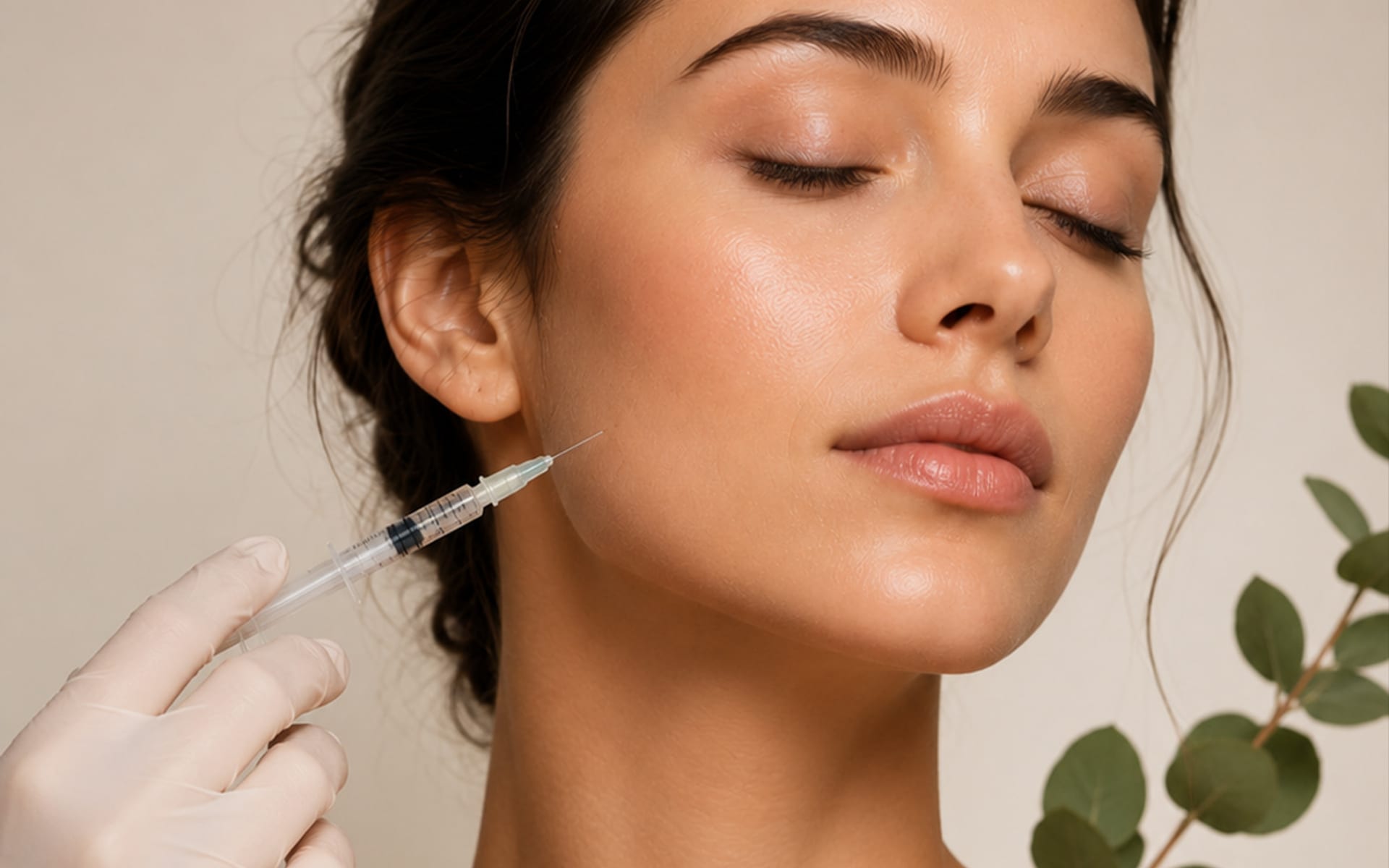
A blend of vitamins, minerals, amino acids, and growth factors is delivered superficially into the scalp with very fine needles, supporting the environment the follicle lives in. It is planned as a series of sessions, with the formulation varying by person.
Hair PRP
Platelet-rich plasma is separated from your own blood by centrifuge and applied to the scalp. Platelets carry growth factors involved in tissue repair, and the rationale is to amplify those signals around the follicle. It is most often considered in earlier stages of miniaturization. Our hair PRP treatment article has more.
Exosomes and polynucleotides
Exosome applications aim to support the micro-environment around the follicle through vesicles that carry signals between cells. Polynucleotides (salmon DNA) sit closer to tissue repair and hydration.
An honest note: exosomes in particular are an evolving, still-researched area. Protocols and long-term data are not as settled as for more established methods, so be skeptical of anyone promising a guaranteed outcome. We compare these approaches in our regenerative aesthetics guide.
When to see a physician
Losing some hair every day is normal. Get assessed without waiting if:
- The shedding has lasted more than a few weeks and is clearly increasing.
- Your part is widening, or your hair is becoming visibly finer.
- Your scalp is red, itchy, painful, scaling, or has smooth, shiny patches, which can signal an irreversible process.
- Shedding comes with fatigue, weight change, or menstrual irregularity.
- There is early, marked hair loss in your family.
The logic is simple: protecting a follicle you still have is far more realistic than recovering one that is gone.
Coming to Istanbul for hair loss treatment
Istanbul attracts many international patients with hair concerns, so it is worth being clear about scope. This is a non-surgical practice: identifying the cause, evaluating the scalp, offering supportive treatments. It is not a transplant clinic.
If you are travelling:
- Bring recent blood work (ferritin, thyroid, B12, vitamin D). It makes the first consultation far more productive.
- Session-based approaches rely on continuity, so discuss upfront how follow-up works.
- The clinic is in Yeşilköy/Bakırköy, a short drive from Istanbul Airport, which keeps trips and follow-ups practical.
Realistic expectations
This is where the field is most often misrepresented, so let's be direct:
- None of these methods will regrow hair on a completely bald, shiny area. The realistic aim is to strengthen thinning hair, slow shedding, and support the hair you still have.
- Results are not fast. The hair cycle is slow, and progress is measured in months.
- Response varies. The same protocol will not produce the same result in two people.
- Continuity matters. In androgenetic patterns the underlying mechanism continues, so support is maintained over time.
- No guarantees. Walk away from anyone offering one.
A well-built plan addresses the cause, adds medical therapy where appropriate, and uses in-clinic treatments to support both. Which combination fits you can only be determined after an examination.
Frequently asked questions
How long does hair loss treatment take to show results? Because the hair cycle is slow, progress is usually assessed over several months rather than weeks. The timeline depends on the type of shedding, the underlying cause, and how you respond, so a fixed schedule cannot honestly be promised upfront.
Is PRP or exosome therapy more effective? They are not direct substitutes: they work through different mechanisms and suit different situations, and exosome therapy remains an evolving area of research. Which one is appropriate is decided after an examination, scalp assessment, and blood work.
Can low iron be causing my hair loss? Yes. Low iron stores are a common driver of diffuse shedding, particularly in women, which is why blood work should be reviewed before starting any in-clinic treatment.
To identify the type and underlying cause of your hair loss and discuss the approach that suits you, you can schedule a consultation.
This content is for informational purposes only and does not replace a medical consultation.