6 min read
First-Time Botox: Preparation and What to Expect
First time Botox: how to prepare, what the appointment feels like, the first 24-hour rules, when results appear, and why the two-week review matters.
Most people booking their first time Botox appointment are not afraid of the needle. They are afraid of the unknown: how long it takes, whether it hurts, whether anyone will be able to tell, and what happens if they dislike the result. This guide covers how to prepare, what the appointment feels like, the rules for the first 24 hours, when the effect appears, and why the two-week review matters.
Preparing for your appointment
Preparation is less about the injection than about reducing the chance of bruising and making the decision on solid ground. Topics worth raising beforehand:
- Blood thinners and medications that increase bleeding. Aspirin, ibuprofen, fish oil, vitamin E and ginkgo supplements can increase the tendency to bruise. Never stop a prescribed medication on your own; only the prescribing doctor can adjust it.
- Alcohol. Avoiding alcohol for around 24 hours beforehand is commonly advised, since it dilates blood vessels and can make bruising more likely.
- Health status. Pregnancy, breastfeeding, certain neuromuscular conditions, an active skin infection in the area and some medications are reasons to postpone or avoid treatment.
- Timing. If you have a wedding, a presentation or a trip coming up, plan at least two to three weeks ahead, so the effect can settle and any bruise can fade.
If you are travelling to Istanbul, allow the same buffer. A session booked the day before a flight home leaves no room for a review appointment, the part first-timers benefit from most. If you are unsure what the treatment does at all, what is Botox is a useful starting point.
What the appointment is actually like
The first session starts with a conversation, not a needle. Your doctor watches your face move: frowning, raising your brows, squinting, smiling. The point is to see which muscles do the work, and whether the line you dislike is genuinely caused by movement. Lines that stay visible when your face is fully relaxed may need a different approach.
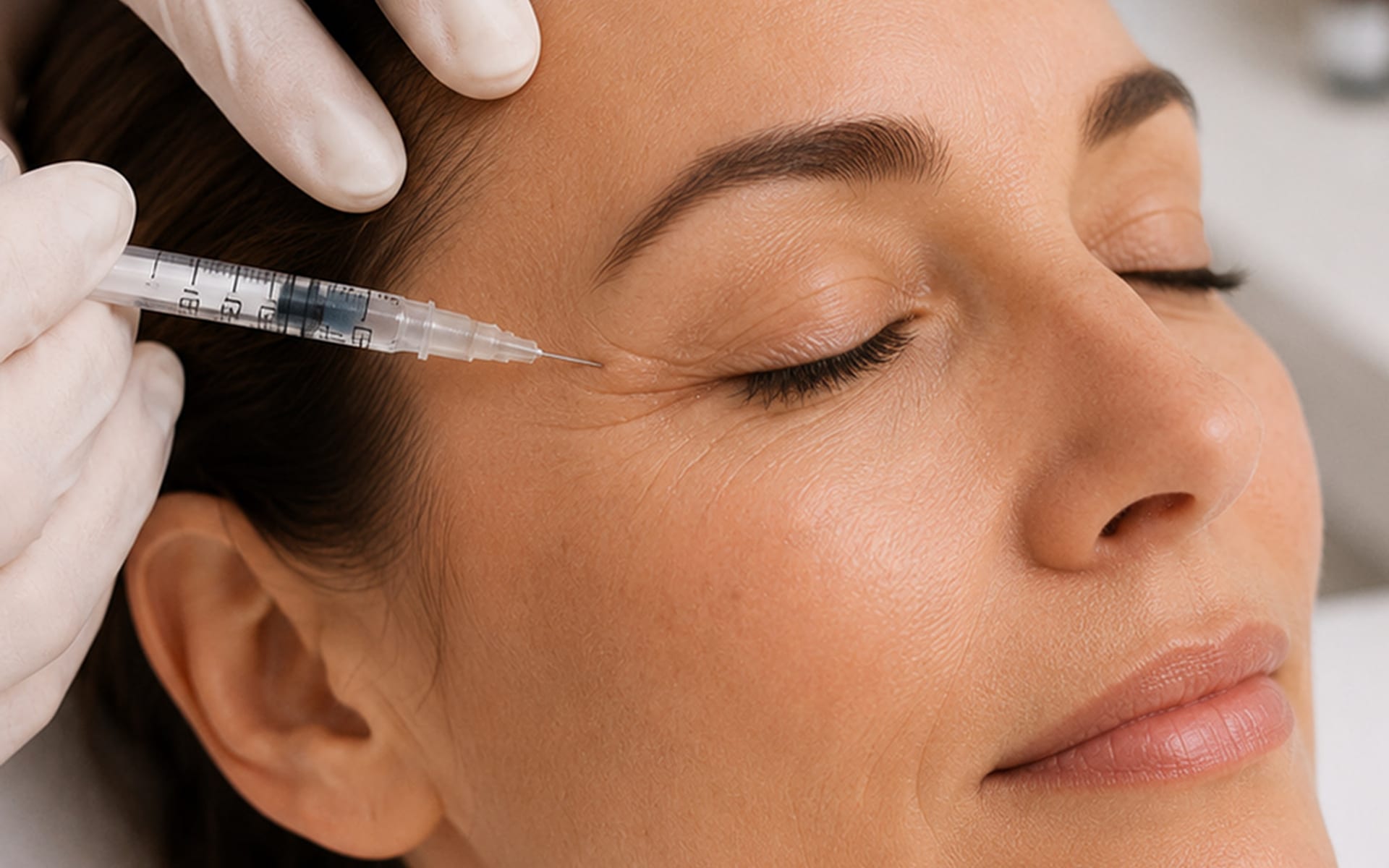
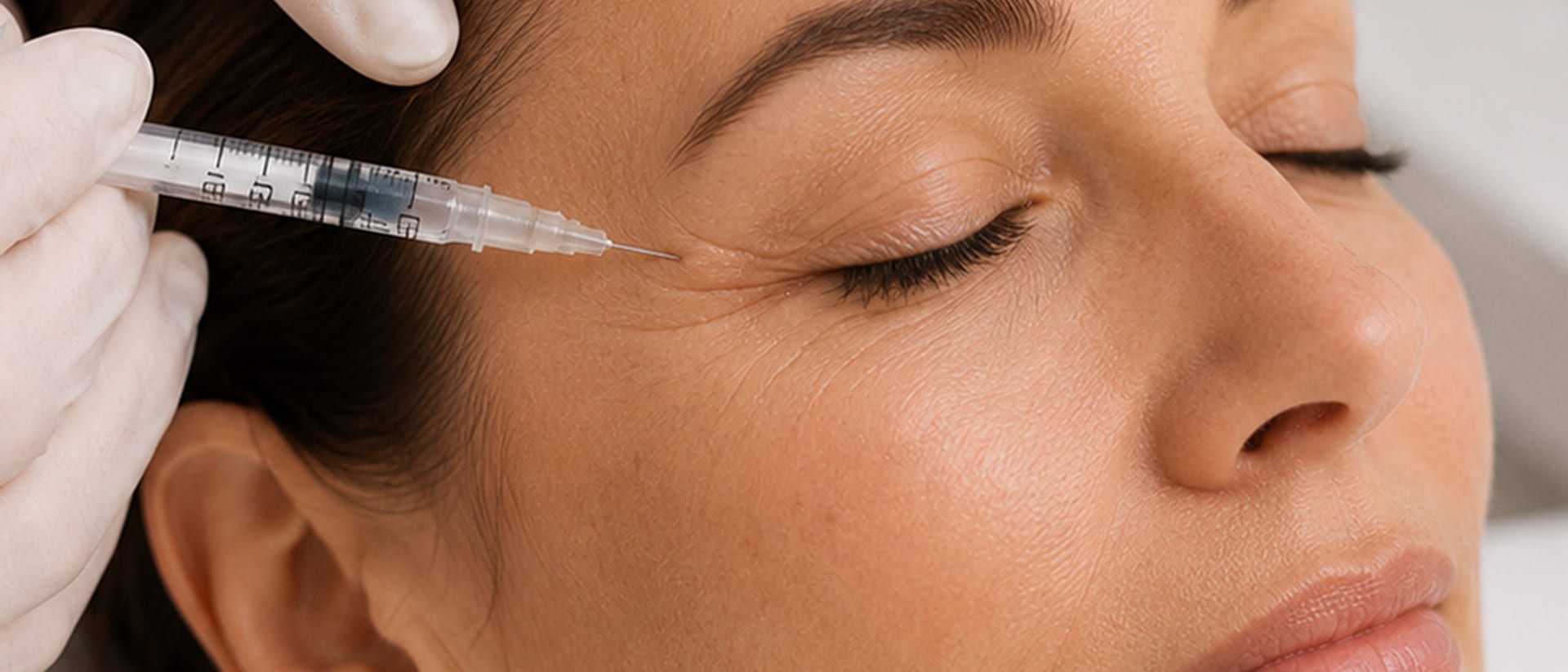
The injections themselves usually take 10 to 20 minutes. The area is cleaned, injection points may be marked, and very fine needles deliver small amounts into specific muscles. Most people describe it as a brief sting. Anesthesia is usually unnecessary, though ice or a numbing cream can be used if you are sensitive.
Small raised bumps and mild redness are common afterwards and typically settle within 15 to 60 minutes. Most people go back to work the same day. Forehead and frown line treatment is a common first-time request and generally recovers uneventfully, though responses differ.
The first 24 hours
The first day matters because the product should stay in the muscle it was placed in. Most of the rules are things not to do:
- Do not rub or massage the area. Even applying makeup, use light touches rather than pressure. Skipping makeup for the first few hours is simpler.
- Stay upright. Avoid lying down, bending forward for long periods or sleeping face-down for the first four hours.
- Skip strenuous exercise. Intense workouts increase blood flow and sweating, so they are usually postponed for 24 hours.
- Avoid heat and alcohol. Saunas, steam rooms, hot showers, sunbeds and strong sun are not ideal on day one, and skipping alcohol reduces bruising.
- Postpone facials and skin treatments. Peels and lasers should wait for the interval your doctor recommends.
Some doctors also suggest gently exercising the treated muscles a few times in the first hours. Practice varies, so follow your doctor's instructions.
When results appear and settle
The most common first-timer disappointment is looking in the mirror the next morning and seeing nothing. This is normal. Botox does not work instantly; it gradually reduces the signal between nerve and muscle. The usual pattern is:
- Days 2 to 4: A subtle heaviness or reduced strength in the area may begin.
- Days 5 to 7: The effect becomes clearly noticeable.
- Days 10 to 14: The result usually settles fully. Judging your result before this window is premature.
These timings are averages and vary from person to person. Muscle strength, metabolism, the area treated and individual response all play a part. How long the effect lasts is equally individual: a first treatment is often described as lasting around three to four months on average, but no doctor can guarantee a duration. There is more detail in how long Botox lasts.
A conservative dose is common in a first session. That is not timidity, it is arithmetic: adding more later is easy, taking it away is not. A first result that feels subtle is often exactly what was planned.
The review appointment
The two-week review is the most valuable and most frequently skipped step. Your doctor assesses the result in motion: brow symmetry, whether your expression is preserved, whether one side retains more movement than the other. What is typically discussed:
- Whether a small top-up is needed for asymmetry or an area that still moves more than intended.
- Whether the result matches your expectation, and what to adjust next time.
- A suitable interval for repeat treatment and a longer-term plan.
This turns a first session from a one-off experiment into a plan built around your face. Which areas, which dose and which interval suit you can only be decided after an examination in person.
Frequently asked questions
Will my face look frozen after my first Botox treatment? With an appropriate dose placed in the right points, the aim is to soften the muscle movement creating a line, not to erase your expression. A frozen look is usually associated with too much product or poor point selection. Responses still vary between individuals, which is why starting conservatively is preferred.
Does it hurt, and can I go back to work afterwards? The needles are very fine and discomfort is usually limited to a brief sting. Most people return to normal activities the same day. Mild redness is common and bruising is possible; both typically resolve in a few days.
Can it be reversed if I do not like the result? Botox is not permanent; the effect wears off on its own. Unlike hyaluronic acid filler, it cannot be dissolved instantly with an enzyme. Issues such as asymmetry can often be balanced with a small adjustment at the two-week review, which is why that appointment matters.
To talk through which area to treat first, and what a measured starting point looks like for your face, you can book a consultation in Istanbul.
This content is for informational purposes only and does not replace a medical consultation.