6 min read
Regenerative Treatment for Under-Eye Dark Circles
Dark circles treatment starts with the right diagnosis: pigment, vascular, or shadow. How polynucleotides, filler, and realistic expectations compare.
If you sleep well and still look tired, you are not imagining it. The most common mistake in dark circles treatment is assuming every dark circle is the same problem. It isn't. This guide explains the three distinct causes, where regenerative options like polynucleotides genuinely help, how they differ from filler, and what a realistic outcome looks like.
Why dark circles happen: three different problems
Under-eye darkness has roughly three mechanisms, and each one responds to a different treatment. Choosing a treatment before identifying the cause is the single biggest reason people are disappointed with their results.
Pigment (brown tone)
Excess melanin in the thin under-eye skin. Drivers include genetics, sun exposure, chronic rubbing (common with allergies), and post-inflammatory pigmentation. Volume does nothing here — adding filler under a pigmented eyelid leaves the color exactly as it was.
Vascular (blue-purple tone)
Eyelid skin is among the thinnest on the body. The blood vessels beneath it show through, reading as blue or purple. Poor sleep, dehydration, salt, smoking, and genetically thin skin all make it more visible.
The goal here is not to remove the vessels but to improve the skin covering them. This is the group where regenerative treatment tends to make the most sense.
Hollowing and shadow (structural)
When volume is lost at the transition between eyelid and cheek (the tear trough), light cannot reach it and casts a shadow. The skin itself may be a normal color; what you see is geometry, not pigment. A useful clue: the darkness deepens under overhead lighting and softens when light comes from the front.
In practice, most people have a mix of the three. Identifying which one dominates requires an in-person examination — assessment under different lighting and simple stretch tests — not a photograph.
The regenerative approach: polynucleotides
Regenerative aesthetics aims to support the tissue's own quality rather than add something to it. Around the eyes, the most discussed option is polynucleotide treatment, sometimes called salmon DNA.
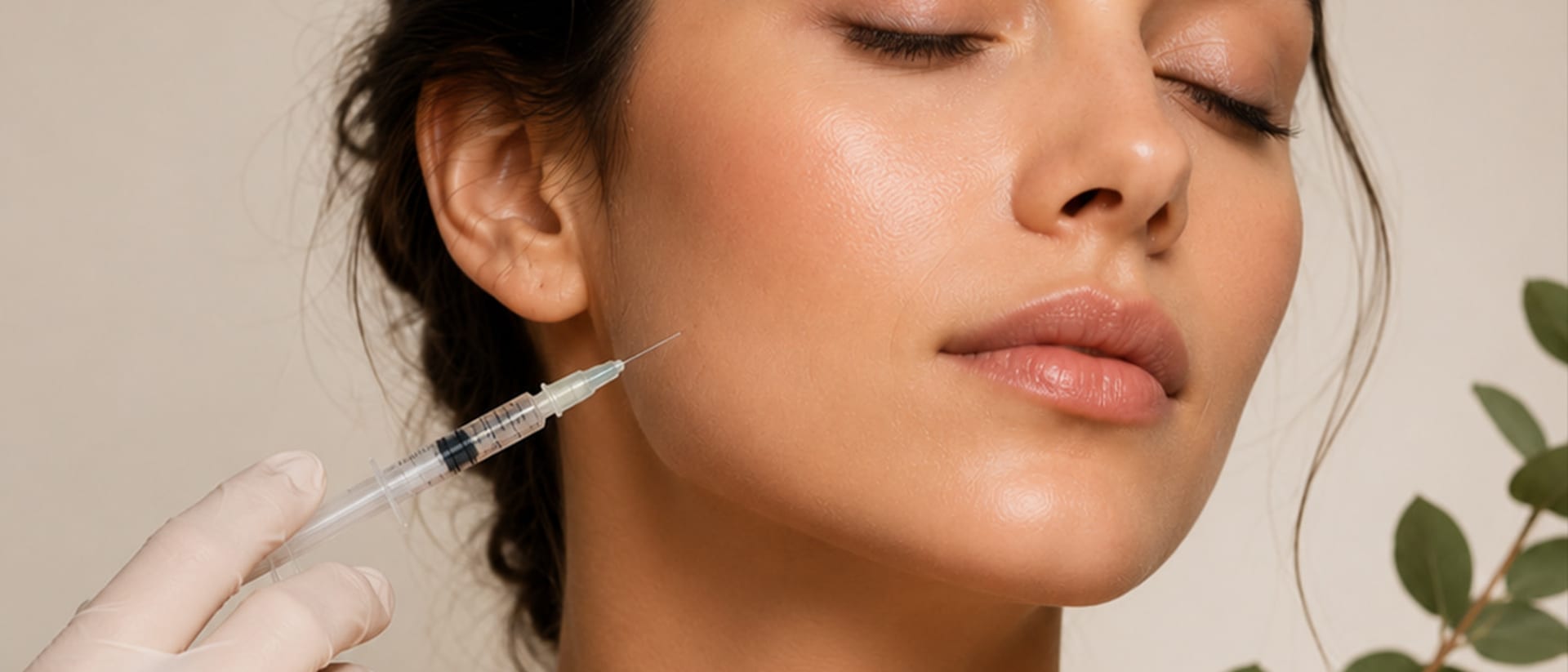
Polynucleotides are delivered in small amounts into the skin, with the goal of supporting the skin's natural repair processes. The intent is to:
- Support hydration in the thin under-eye skin,
- Gradually improve skin quality and thickness,
- Soften how strongly the underlying vessels show through.
This is not a volumizing treatment and it will not change your facial contours. Results build gradually over weeks, usually across a short series of sessions. The number of sessions, spacing, and whether you are a suitable candidate at all vary from person to person — no honest clinic can promise a fixed protocol before an examination.
If you are comparing options, our PRP vs. exosome vs. polynucleotide guide sets them side by side. Some of these methods — exosome therapy in particular — remain emerging and under active research, and we describe them that way rather than overstating the evidence.
Polynucleotide vs. filler: which, and when
Dermal filler and regenerative treatments are not rivals. They solve different problems.
- Filler replaces lost volume and reduces the shadow. It addresses the structural component and its effect is visible sooner.
- Polynucleotides support skin quality. They make more sense when thin skin and vascular show-through dominate. The change is subtler and gradual.
The under-eye area is anatomically demanding: thin skin, mobile muscle, and important vessels close by. Poorly planned volume can cause puffiness, irregularity, or a bluish cast (the Tyndall effect). "Less, but correct" matters more here than almost anywhere else on the face, and sometimes the right decision is to inject nothing and address the underlying cause first. For some patients the two are sequenced over time — a plan made after an examination, not before it.
Realistic expectations
No treatment erases dark circles permanently. The goal is to soften the darkness and the tired expression, not to eliminate them.
- Genetically thin skin can be supported, not replaced.
- Results are not permanent; maintenance is part of the plan.
- The same treatment gives different results in different people.
- Sleep, salt, alcohol, and allergies keep affecting the area day to day.
Improvement is realistic. Perfection is not something anyone should promise you.
Where home care stops working
Home care helps — within limits. Genuinely useful steps:
- Daily sun protection, especially for pigment-driven darkness.
- Stop rubbing, and treat the allergy if that is what is causing the rubbing.
- Sleep, salt, and hydration, which mainly affect morning puffiness.
- Caffeine or vitamin C products, which may give a mild, temporary improvement.
- Concealer, which manages appearance without changing the cause.
But no cream reaches deep enough to hide a vascular network, and no serum fills a hollow. Home care works on the pigment and lifestyle components and runs out of road on the vascular and structural ones. That is the point at which a medical consultation becomes worthwhile.
Planning a visit from abroad
Dr. Burak Gümüşçü's practice is in Yeşilköy/Bakırköy, Istanbul, close to the airport, which makes it practical for patients traveling in. A few points worth knowing:
- Assessment comes first. Photos can start the conversation, but the treatment decision is made in person.
- Regenerative protocols usually run as a short series spaced over weeks, so they may need planning around your travel rather than a single trip.
- Mild swelling or small bruises can follow any injectable, so leave a buffer before important plans.
Frequently asked questions
Can dark circles be removed completely? Usually not. When the dominant cause is correctly identified, the darkness and the tired look can be meaningfully softened. How much benefit you see depends on the type of dark circle and on your own skin, which is why an examination comes before any promise.
How many polynucleotide sessions are needed? Typically a short series spaced a few weeks apart, with results developing gradually. There is no standard number — it depends on your skin quality, age, and goals, and is decided together with your doctor.
Is filler under the eyes risky? The under-eye area requires experience because the skin is thin and important vessels are nearby. In a suitable patient, with the right product and technique, it is a reasonable option — but it is not suitable for everyone, and suitability is determined by examination.
If you would like to understand which type of dark circle you have and which approach fits you, you can schedule a consultation to discuss it.
This content is for informational purposes only and does not replace a medical consultation.