6 min read
Botox for Men: A Guide
Botox for men needs different dosing and a flat, masculine brow. Learn how male facial anatomy changes the plan and what a natural result looks like.
Most men who ask about Botox are not chasing a new face. They are tired of a single line between the brows that makes them look angry in every photo, or of colleagues asking whether they slept badly. "Brotox" has moved from a punchline to one of the most requested treatments for men worldwide. But male facial anatomy is genuinely different, and a plan copied from a female patient will not produce a masculine result. Here is what actually changes.
Why male facial anatomy changes the plan
Botox works by temporarily reducing the contraction of the muscles that create expression lines. The result therefore depends almost entirely on the muscle underneath. In men, those muscles are typically stronger.
General clinical consensus holds that the frontalis and glabellar muscles are more bulky in men than in women. A few structural differences travel with that:
- Thicker skin with higher sebum production on average.
- Richer blood supply, which can slightly raise the chance of a small bruise.
- A broader forehead and heavier brow ridge, so the muscle covers more territory.
- Lines that tend to set in earlier and deeper, particularly between the brows.
Practically, this means dose. A larger, stronger muscle usually needs more units and more injection points than a female patient would need for the same softening. "Usually" is the key word — it is a tendency, not a formula. Your actual dose depends on your muscle strength, the depth of your lines and what you want to keep. That can only be judged in person.
A masculine result: protect the brow
The most common aesthetic mistake in male Botox is importing a brow shape that suits a woman. In many female patients, a gentle lift and arch at the outer brow is a desired outcome. In men it is exactly what you want to avoid.
The masculine brow generally sits lower, flatter and closer to the orbital rim. If the outer tail of the brow is pushed up, the face reads as surprised or "done" — and on a male face this is noticed much faster. So the goal with men is not to lift the brow. It is to soften the line while preserving the brow's existing height and flatness.
That is a technical decision:
- Injection points are placed with careful attention to their distance from the brow line.
- Activity in the lower forehead is not switched off completely; some movement is left so the brow keeps its support.
- The frown complex and the forehead are treated as one system, because each one changes where the other sits.
- Starting conservatively and topping up at the two-week review is usually the safest route.
The measure of success is simple: your face should look rested, not still. The idea that Botox erases expression is a persistent misunderstanding — we cover it in detail in does Botox freeze your face.
Popular treatment areas for men
The areas men request most are the upper-face zones that make an expression read as harsh or exhausted:
- Frown lines (glabella): The most requested area by far, and usually the strongest muscle group. This is the "always angry" line.
- Forehead lines: Horizontal lines. Dosed carefully and in balance with the frown, since brow heaviness is a real risk in men.
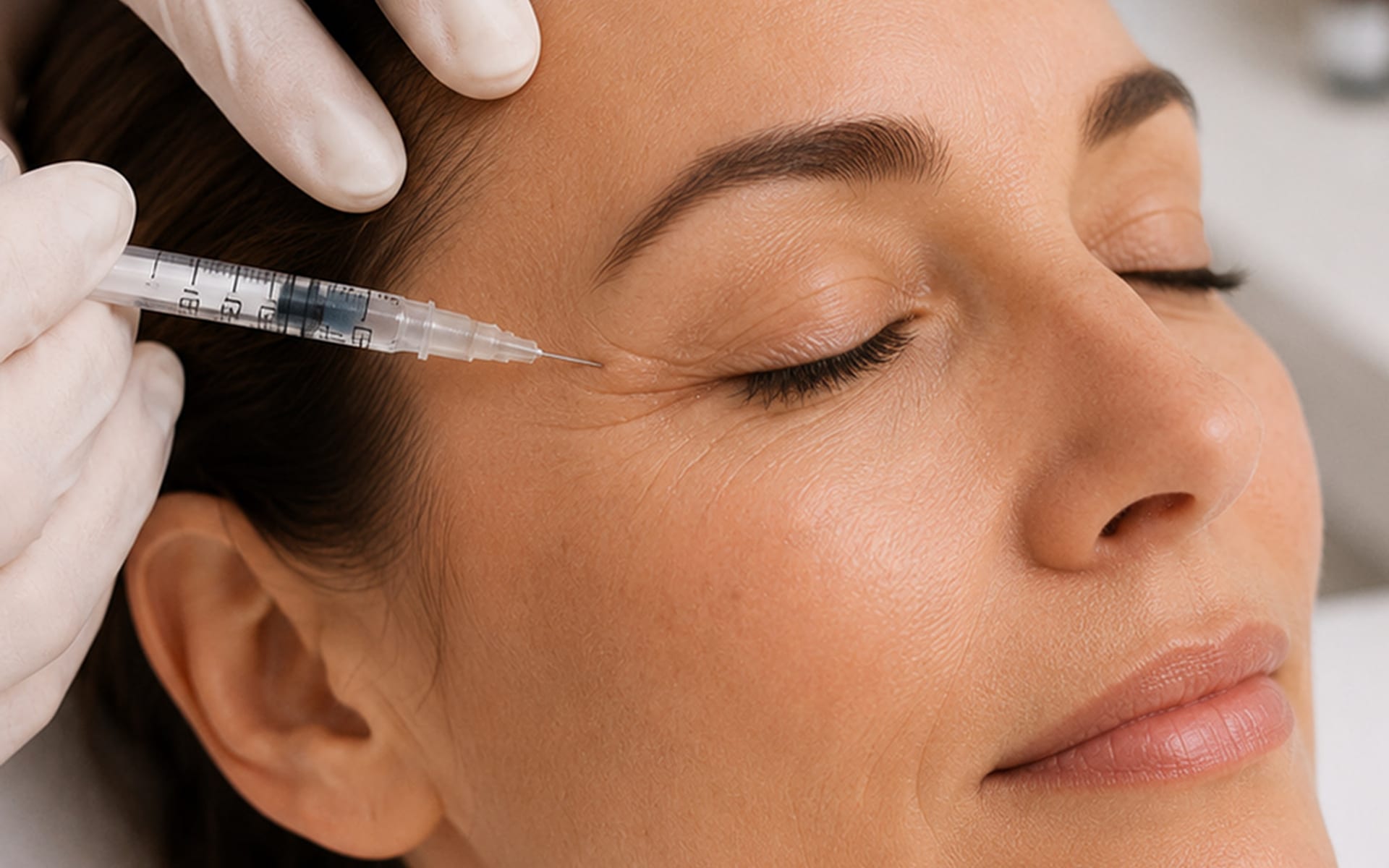
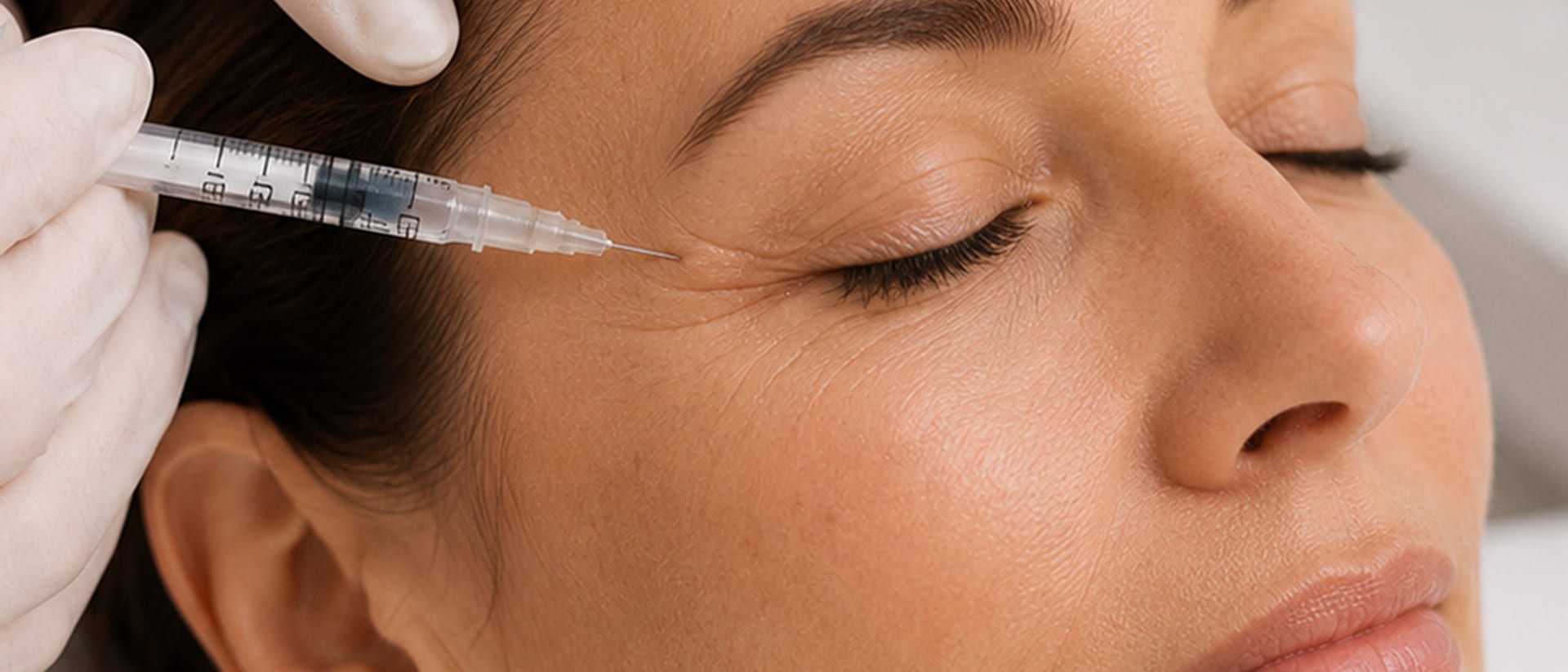
- Crow's feet: Lines at the outer eye. The aim is to soften them without flattening a genuine smile.
- Masseter (jaw muscle): Used for clenching and grinding complaints. Because men usually do not want a narrower jaw, the dose and target differ from the slimming approach.
- Excessive sweating: Botulinum toxin for underarm or palm sweating is a recognized medical indication and is popular with men.
- Neck bands: An option when the platysmal bands become prominent.
Not every area suits every man. Which one to treat first, which one to leave alone and which one is unnecessary is an individual decision.
Setting expectations
Botox is not permanent, and it should not be. Onset is typically 3-7 days, with the full result settling on average around two weeks. Duration averages 3-4 months. Because men generally carry more muscle mass, the effect is often observed to fade somewhat sooner, and training intensity, metabolism and dose all play a part.
A few honest points before you book:
- Botox addresses dynamic lines caused by movement. Deep static creases etched over many years may soften but not disappear with Botox alone.
- Sagging, volume loss and skin quality are separate problems. Botox does not substitute for them.
- After treatment, avoid rubbing the area, bending forward for a few hours, and heavy training that day.
- Mild redness, a small bruise or a short-lived headache can occur and usually settle on their own.
- No physician can guarantee a particular outcome. Results vary from person to person.
If you are traveling to Istanbul for treatment, allow enough time to be assessed properly and, ideally, to be reviewed once the result has settled. A first consultation that watches your face in motion is what makes the dose decision sound.
Frequently asked questions
Why do men usually need a higher Botox dose? The forehead and frown muscles in men are generally more bulky and stronger, so achieving the same softening often requires more units and more injection points. This is a tendency rather than a rule; the dose is determined individually during examination, not from a standard chart.
Will Botox make my face look feminine? Not when it is planned correctly. The feminizing risk comes from lifting the outer tail of the brow. In men, the goal is to preserve the flat, lower masculine brow position while softening the line, and the placement of the injection points is what determines this.
How long does it last for men? On average 3-4 months. Because of greater muscle mass, the effect can sometimes fade a little sooner in men. The right interval between sessions depends on your dose, muscle strength and metabolism.
If you would like to understand whether your frown line or your forehead lines should come first, you are welcome to arrange a consultation to discuss a plan suited to your face.
This content is for informational purposes only and does not replace a medical consultation.