
5 min read
What Is Temple Filler and What Does It Change?
What is temple filler, how does a hollow temple change the face, who does it suit and where does it stop? A plain guide that sets the whole thing out.
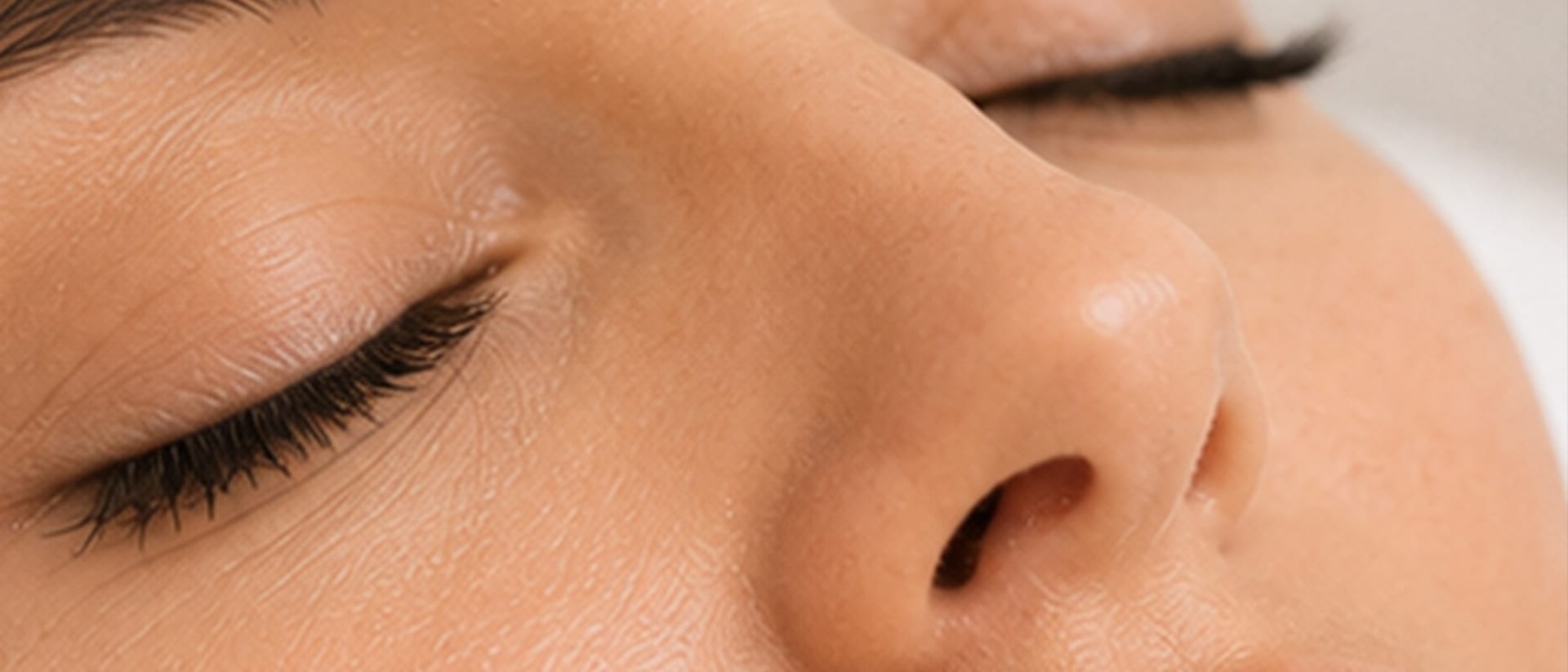
What is temple filler tends to get asked with a certain puzzlement: nobody can say which part of the face has changed, but the gaze reads tired. The area just outside the eyes and above the brow, when it hollows, narrows the upper third of the face. This article covers what the treatment does, who it suits and where it stops.
What is temple filler?
Short answer: A treatment in which hyaluronic acid-based volume is placed in the hollowed area between the outer corner of the eye and the hairline. The aim is not to fill the region but to balance volume loss in the upper third.
This is one of the quietest areas of the face. Nobody looks directly at their own temples in the mirror, yet when they hollow, the whole gaze is affected: the brow reads lower on the outside and the cheekbone reads more prominent than it is.
So the complaint rarely arrives with the name of the region attached. "I look tired" and "my eyes have got smaller" often sit on top of this area.
The goal of the treatment is balance rather than visibility. Support in the right amount reads as a general settling in the face rather than as a single change.
How does it change the face?
The most visible change is the width of the upper third. A hollowed temple narrows the face at the top and makes the lower face read wider; support restores that proportion.
The second change appears at the brow. Volume loss at the temple reduces the ground supporting the outer end of the brow, and when that ground returns, the brow tail can settle somewhat.
The third is the transition towards the eye. When the line between the temple and the cheekbone is interrupted, the gaze reads hollow; support softens the transition. We covered facial proportions separately.
Who does it suit?
Short answer: Results are more satisfying where volume loss at the temple is marked and skin laxity is not dominant.
The group that benefits most are people losing support in the upper face with age. That change moves slowly and is usually noticed when comparing old photographs rather than in the mirror.
The second group are people whose face has emptied out after rapid weight loss. A change welcomed elsewhere on the body can show here as a visible hollow.
The third group are people with a naturally narrow upper face. There the cause is anatomy rather than ageing, and the goal is balancing rather than restoring, with the expectation set accordingly.
How is it done?
The treatment is usually carried out with topical anaesthetic cream and does not take long. The product is placed either deep or in a more superficial plane depending on the structure of the region.
The temple demands care in vascular and neural terms. Knowing the map of the area is treated as a safety matter that comes before any question of aesthetics.
Short-lived swelling, tenderness and bruising afterwards are expected and settle within a few days. Increasing pain, blanching, a change in colour or any complaint involving vision are not in that group; the warning signs in our filler side effects guide should be reported without delay.
When does the result settle?
Short answer: Generally within a few weeks. What appears in the first days is distorted by swelling, so judgements made during that window are unreliable in both directions.
In this region the way the product holds water can also affect the picture. Fullness seen early on decreases over time and the real result emerges.
Any decision to add more therefore belongs at the review. Adding is always possible; removing is not always as straightforward, and that asymmetry shapes the plan itself.
Where does it stop?
The treatment has a ceiling, and it is drawn by the proportions of the face rather than the quantity of product. Past a certain point, added volume stops creating balance and starts making the upper face read wider than it should.
Where skin laxity is marked, the expectation is set differently. Volume added from below does not create tension, and saying so at the outset is part of a sound assessment.
Because so much depends on who carries the treatment out, we covered why experience matters separately.
Another limit concerns the neighbouring regions. Treated in isolation, the temple can read disconnected from the rest; we covered cheek and mid-face filler separately. The scope of the treatment sits on the temple filler page.
Frequently asked questions
Is temple filler painful? The treatment is usually carried out with topical anaesthetic cream and does not take long. A feeling of pressure and short-lived discomfort during the injection can be described. Tenderness in the area afterwards is the expected course; it settles within a few days and needs no separate intervention.
Will the result look natural? Where the amount and the distribution are kept measured, the change does not usually read as a single procedure; the face simply looks rested. Unnatural results are linked to excess product and to a plan that ignored the face as a whole, which is why working in stages is preferred.
How many sessions does it take? That follows the depth of the hollow and the rest of the face, and it is decided at an examination. Most plans start with a measured amount and reassess once the result settles. A session count quoted in advance was quoted for a face nobody has seen.
If you would like to work out what is missing in your upper face and which approach suits it, a consultation is the place to look at it.
This content is for informational purposes only and does not replace a medical consultation.