5 min read
What Is Face Mesotherapy? Support for Skin Quality
What is face mesotherapy, which complaint brings it up and what does it not promise? A short, plain plain guide to the subject for anyone weighing it up.
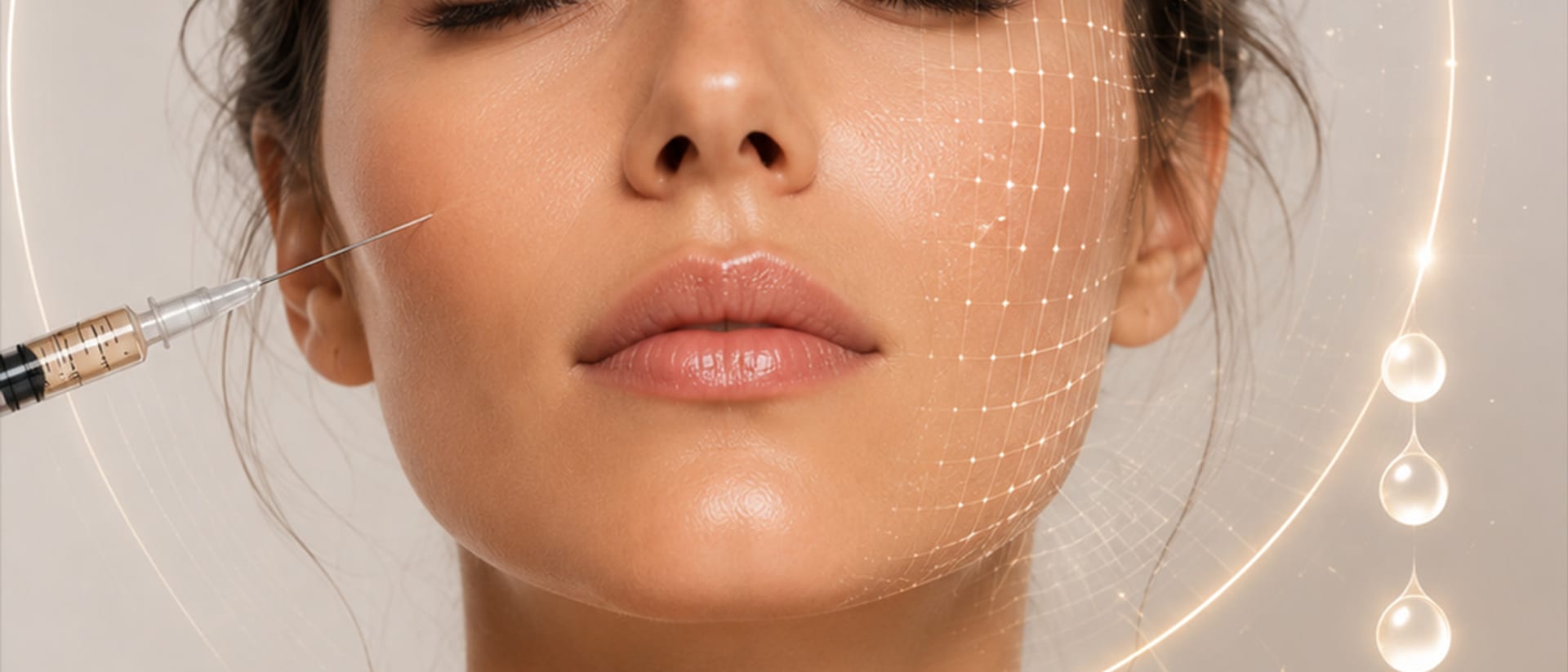
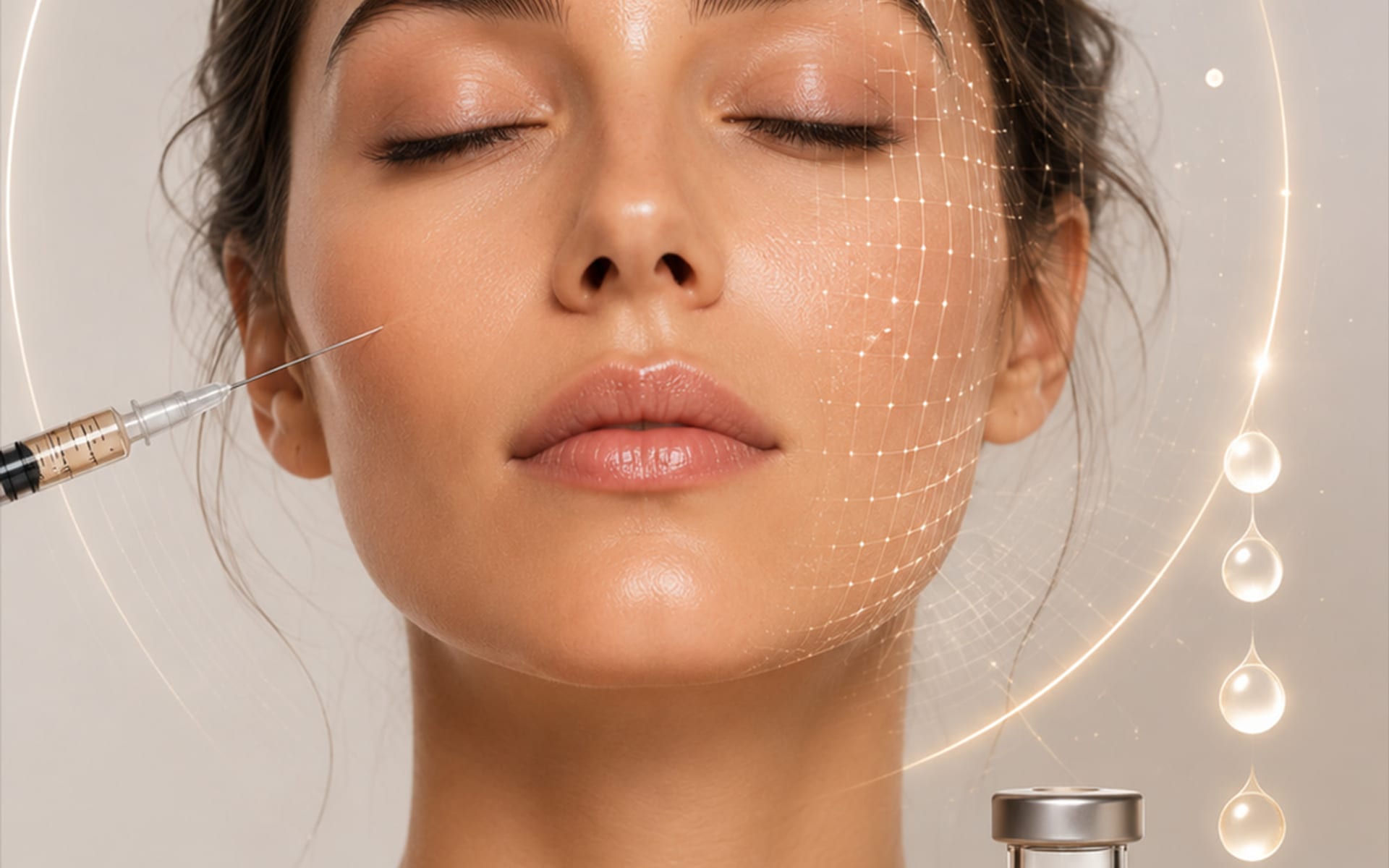
An honest answer to what is face mesotherapy needs two sentences: it is a support treatment that aims to support the moisture level and surface quality of the facial skin through small injections, and it is not a method that adds volume or lifts sagging. When that distinction is not made at the outset the expectation is set wrongly. This article covers what it targets, which complaints bring it up and where its limit begins.
What does it target?
Short answer: The target is the moisture level and surface quality of the facial skin. The content is placed into the upper layers through small injections, and the aim is described as supporting the tissue's own repair process.
The complaint usually arrives in the same words: my face looks dull, it looks matte, I look tired even when I have rested. These are not volume or sagging complaints but complaints about surface quality.
That is exactly where the treatment comes onto the agenda. Where the skin is healthy but has lost its brightness and holds less moisture, support becomes meaningful; what causes dull skin separates out the reasons behind it.
What changes in the facial area?
Facial skin is thin and mobile tissue. Muscle movement, sun exposure and weather wear this area faster than the rest of the body.
Areas separate within the face too. The cheeks and forehead are treated for general skin quality, while the eye area and the area around the mouth become headings of their own with their own complaints.
The content applied, the injection depth and the technique therefore change by area. The same treatment is not carried out the same way across the whole face, and that decision is always made at the examination.
What does it not do?
Short answer: It does not add volume, it does not lift sagging and it does not stop a movement line. Each of those three complaints has its own method and face mesotherapy does not stand in for any of them.
Volume loss is the domain of filler and a separate heading. Sagging has a larger scale; in hydrated skin the appearance can improve somewhat but the sagging itself stays where it is.
Movement lines relate to muscle action. Fine dry lines caused by moisture loss soften markedly with hydration, while movement lines do not, and that distinction is made at the examination.
Is mesolifting the same thing?
The two names get used interchangeably in marketing, which leaves what the treatment actually does unclear.
The word "lifting" means raising, and it sets an expectation different from the treatment's aim. Support aimed at skin quality is not a procedure that lifts sagging.
We cover that separately in what is mesolifting. Whatever the name, the question to ask stays the same: what content is applied and what does it target.
What is the session like?
The content is delivered to the surface through many small injections. The area is cleaned first and a topical anaesthetic is used where needed.
Afterwards, redness, small bumps and tenderness are ordinary findings. They settle within hours, but placing the treatment immediately before an important social commitment is uncomfortable.
What the product is should be stated to you. In Türkiye, licensing is handled by TİTCK and seeing the box is your right; a known allergy changes the choice directly.
How long does the result last?
Short answer: The effect is not permanent. What is supported is living tissue and when the support stops the tissue returns to its own course.
This is not a shortcoming but the definition. No support treatment aimed at skin quality leaves a permanent result after a single round.
The duration is set by the skin's starting condition, sun protection and daily habits. The session count and interval are a separate heading; how many sessions covers it, and the treatment's own page sits under face mesotherapy.
Frequently asked questions
Does face mesotherapy rejuvenate the skin? The word rejuvenation sets the expectation wrongly. The aim is the skin's moisture level and surface quality; it does not address volume loss or sagging. Where the skin looks dull and dehydrated support is meaningful, but it is not a method that stops ageing itself.
Will one session be enough? Generally not, and an approach promising a result from a single session is not describing the treatment honestly. It is planned as a series because the tissue's response builds over time, and the first session works more as a measuring round. The assessment comes after the series.
Should I stop using my creams? No. The treatment does not replace the daily routine; it runs alongside it. Sun protection sits above both — no treatment aimed at skin quality holds where it should without regular protection. The routine and the treatment are not alternatives to one another.
At what age is it done? Age alone is not the measure; the measure is what the complaint is. Dullness and moisture loss are described across a wide age range. Where the source of the complaint is volume loss or sagging, though, the treatment does not give the expected answer at any age.
If you would like to talk through the source of your complaint and whether this treatment suits you, the consultation assesses the skin by examination.
This article is for general information and is not medical advice. Assessment and treatment decisions follow a medical examination; results vary between individuals.