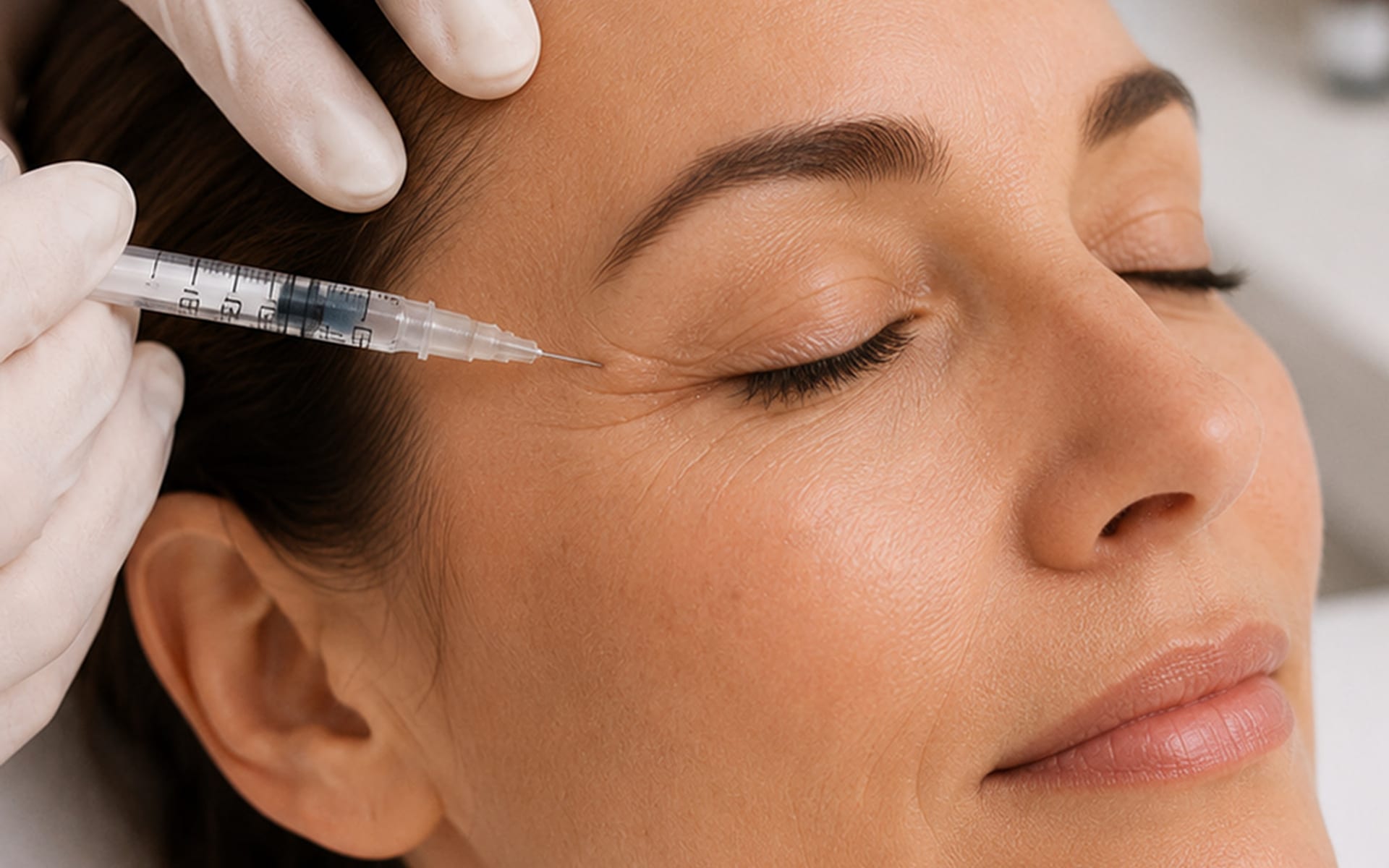
5 min read
What Age to Start Botox? The Picture Decides, Not a Number
What age to start botox, what starting early actually means and how the decision is made. A short guide that looks at the picture rather than a number.
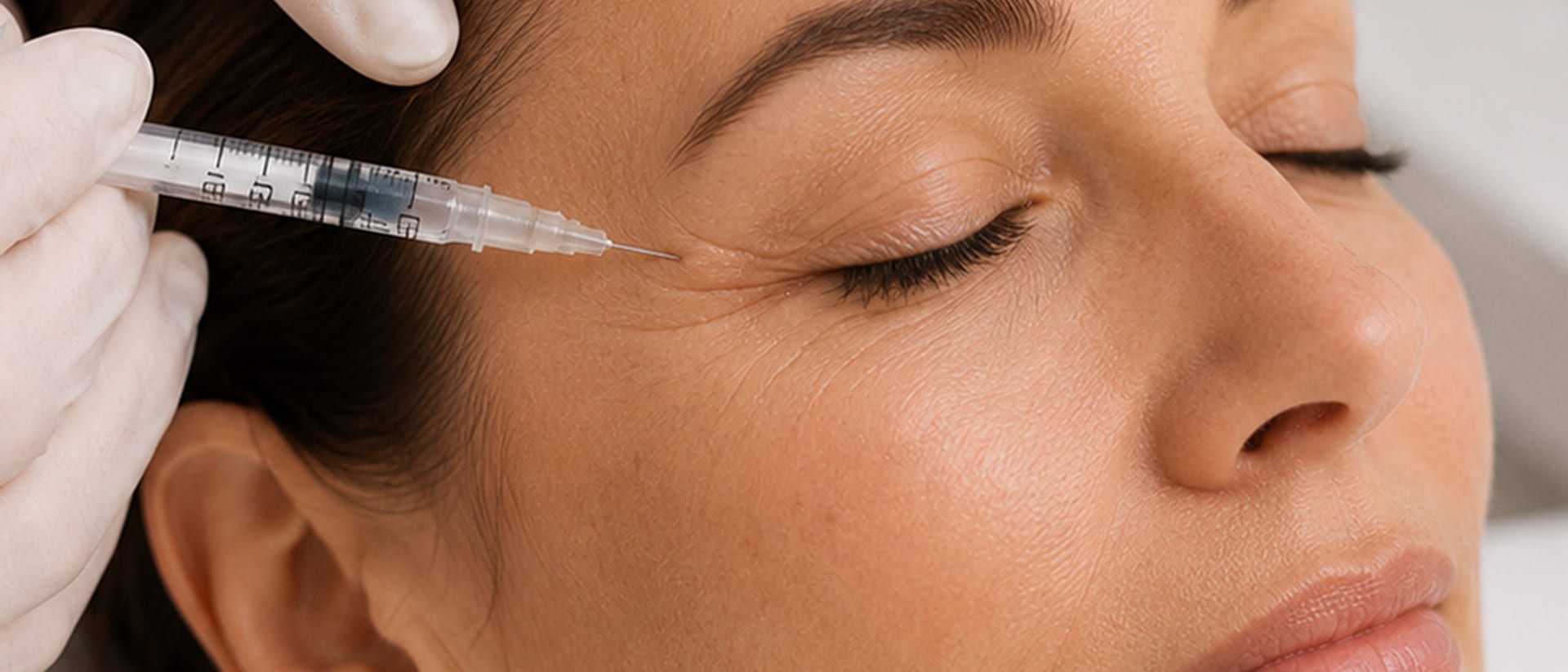
The figures given for what age to start botox do not agree with each other, because age is not what decides. The decision rests on whether a line shows only with movement or also when the face is at rest. This article covers that distinction, what starting early actually means and how unnecessary treatment is separated out.
Why is there no age limit?
Short answer: Because the picture can be completely different in two people of the same age. Expression use, skin quality, sun exposure and genetic predisposition determine when lines become marked far more than age does.
In someone who uses their expressions heavily, lines can settle at a young age. In another person of the same age who uses fewer expressions and stays out of the sun there may be no picture yet.
Sun exposure and smoking can bring the picture forward too. As skin quality falls the same expression settles a line faster; that is one of the factors that stops age being a criterion on its own.
What gets asked at the consultation is therefore not your age but your complaint: which line bothers you, how long it has been there and does it show when your face is at rest?
Age is not entirely irrelevant, of course; but it is handled as part of the picture rather than on its own.
The real criterion: dynamic or static?
A line that shows only while making an expression is called dynamic. One that is still there when the face is at rest is called static.
That distinction decides the matter directly. Reducing muscle movement delivers the expected result in a dynamic line; in a static line the line has settled into the skin and it may not be enough on its own.
The distinction is made at examination and is quite simple: someone is asked to make the relevant expression, then to relax the face completely. The difference shows which stage they are at.
That distinction has another benefit: people see what is what on their own face. Rather than pointing at the mirror and saying "make this line go", talking about which line formed by which mechanism makes the expectation realistic by itself.
In most pictures the two are present together. In such a picture the expectation should be "it will become less marked" rather than "the line will disappear", and that is said at the outset.
What does "preventive botox" mean?
Short answer: Treating early in order to delay a dynamic line becoming static goes by that name. The logic is slowing the way repeated muscle movement settles a line into the skin.
The picture where that is meaningful is defined: the line shows markedly with movement and there are signs of it beginning to settle.
In this picture the treatment is done not to remove the line but to slow its formation. The expectation is set accordingly and the dose is generally planned more cautiously.
The picture where it is not meaningful is defined too: treating a face with no lines at all, where not even movement produces a marked crease, has no preventive meaning.
An approach that does not separate those two turns "start early" into a sales line. The right question is not "how old am I" but "what are we delaying on my face".
Is there a risk in starting early?
The treatment itself is temporary and its effect passes. But unnecessary treatment means unnecessary risk; every injection carries its own ordinary findings.
The second heading is the interval. Someone starting early will be treated over more years, which makes keeping to the interval and not using higher doses than needed even more important.
The third is expectation. In a young face the aim is softening movement rather than stopping it; otherwise a frozen expression out of keeping with the age appears, and that is not wanted.
The fourth is the order. In a young face the source of the complaint is often skin quality rather than muscle; in that picture the treatment does not deliver the expected change and discussing how often to repeat becomes beside the point.
Is it ever too late?
Even where static lines have settled the treatment has a value: when muscle movement reduces the line deepens more slowly and its appearance softens.
But it may not be enough on its own in that picture. Skin quality is the heading that comes to the fore; if the skin itself continues to carry the line, expecting a full result from one treatment is not realistic.
Other headings aimed at skin quality or volume loss come onto the agenda; botox or filler is covered separately.
So "I have left it too late" is usually not true, but it does change the expectation. How much change can be expected is discussed at examination.
How is the decision made?
Short answer: The decision rests on examination rather than age: whether the line is dynamic or static, the strength of the muscle and the appearance being aimed for are weighed together.
At examination the stage of the line is looked at first. Then the strength of the muscle is assessed and the intended appearance discussed.
A cautious dose is preferred at the first treatment. A shortfall can be added to but an excess cannot be taken back; the unit logic covers that asymmetry.
Deciding not to treat is a valid outcome in its own right. Saying the picture does not yet call for treatment is worth more than recommending a procedure that will not deliver. The treatment's own page sits under botulinum toxin.
Frequently asked questions
Is botox in your twenties too early? Age itself does not decide. In someone who uses their expressions heavily lines can begin to settle at that age and the picture may call for treatment. In a face with no lines at all the treatment has no preventive meaning; the distinction is made by examination.
If I start, do I have to keep going? No. When treatment stops the muscle returns to its former strength and the appearance approaches the course it was on before, rather than going somewhere worse. So the worry about "starting means forever" has no basis; the decision is made afresh each time.
Does starting early prevent lines completely? It does not prevent them, it can delay them. Muscle movement is not the only factor in a line settling into the skin; skin quality, sun exposure and genetic predisposition all play a part. A promise of "no lines at all" does not match how this treatment works.
Is it worth starting later in life? Yes, but the expectation is set differently. In settled lines reducing movement slows the deepening and softens the appearance, but does not remove the line. Headings aimed at skin quality enter the same assessment in this picture and are weighed alongside.
If you would like to talk through whether your picture calls for treatment, the consultation assesses the lines both in movement and at rest.
This article is for general information and is not medical advice. Assessment and treatment decisions follow a medical examination; results vary between individuals.