
6 min read
Filler for Nasolabial Folds
What nasolabial fold filler is, why the lines deepen, and why filling the crease alone may be the wrong answer. An informational guide.
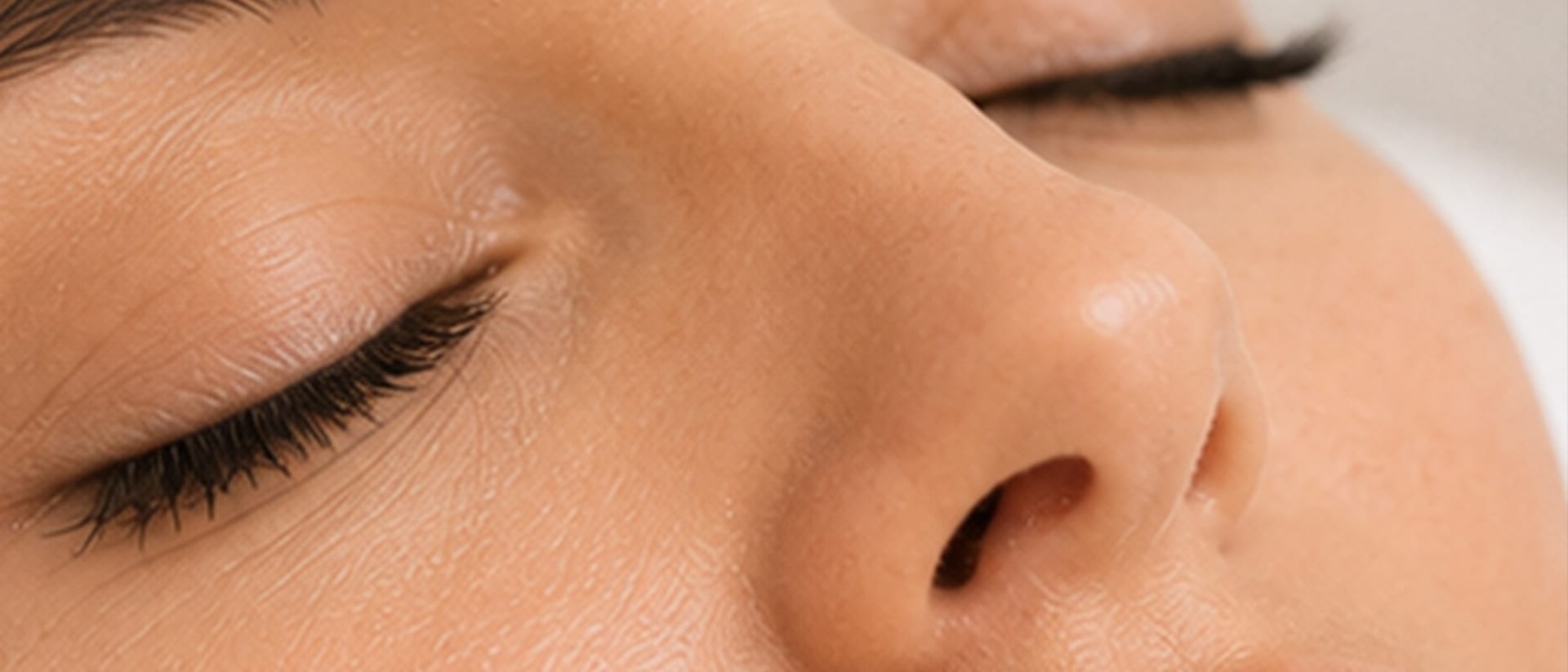
Most people notice them in photos before the mirror: the two lines running from the sides of the nose to the corners of the mouth. Nasolabial fold filler is one of the most searched-for answers to this concern. But the area is less straightforward than it looks, because the reason the fold deepens usually sits somewhere else entirely. This guide explains what causes the fold and how it is approached.
Why the nasolabial fold forms
The nasolabial fold is a normal anatomical boundary, not a flaw. Everyone has one, and it appears in every smile from childhood onward. What changes with time is that it casts a visible shadow even when the face is at rest.
Several things contribute to that shift:
- Midface volume loss. The fat compartments over the cheekbone thin and drift downward. That descending tissue stacks up along the upper edge of the fold and deepens it.
- Bone remodeling. The facial skeleton, particularly around the upper jaw, gradually recedes, leaving the soft tissue above it less supported.
- Skin quality. As collagen and elastin decline, skin recovers less readily from repeated creasing.
- Expression habits. Frequent, strong smiling contributes to the crease becoming etched over time.
- Lifestyle factors. Sun exposure, smoking, and rapid weight changes can accelerate the process.
In other words, a deep nasolabial fold is usually a volume and gravity problem rather than a skin wrinkle. That distinction changes the entire treatment plan.
Why filling the line alone may be the wrong move
The most common mistake is injecting a large amount of product directly into the crease. It seems logical: there is a groove, so fill it. But when the true cause is midface volume loss, treating the crease only masks the symptom.
The likely results of that shortcut:
- Heaviness. Adding product beneath tissue that has already descended can make the lower face look fuller, not fresher.
- An unnatural look. The line softens, but its relationship with the upper face is lost, and the area around the mouth can appear puffy.
- Odd movement. Overfilling often shows itself as a visible ridge when you smile.
- Short-lived satisfaction. Because the underlying support was never addressed, the result tends to disappoint over time.
The nasolabial region also demands anatomical caution, as important vascular structures run through it. Treatment should be carried out by a physician who understands the layers, using an appropriate technique and product.
The approach: treat the cause, then the line
A sound plan starts with assessing the face as a whole. The question at consultation is not "how do I fill this line?" but "why did it get deeper?"
The sequence usually looks like this:
- Restore midface support first. If volume loss is the dominant factor, structural support over the cheek can lift the overlying tissue and soften the fold's shadow indirectly. See our guide to cheek and midface filler.
- Address any residual crease with restraint. Once the midface is supported, a much smaller refinement is often all that remains necessary.
- Support skin quality. Fine surface lines and thinning skin may call for a different category of treatment.
Hyaluronic acid based products are generally preferred here. Hyaluronic acid occurs naturally in the body, binds water, and can be dissolved with an enzyme if needed — a meaningful safety advantage in a sensitive area. The right product, quantity, and injection plane vary from person to person and can only be determined by examination. For the broader logic behind these treatments, see our overview of dermal fillers.
Combining treatments: no single injection solves everything
The nasolabial region is in constant conversation with the rest of the face. A plan built around it alone is rarely the strongest plan.
Areas commonly assessed alongside it:
- Cheek and midface support: the most frequent complementary step.
- Chin and jawline: a better-defined lower frame can make the midface look more balanced.
- Corners of the mouth: downturned corners change how the fold reads.
- Skin quality treatments: better hydration and texture soften how the shadow appears.
The goal is not more procedures; it is the right order. A staged approach lets you see the effect of each step before deciding on the next. Adding is always possible later. Removing is rarely as simple.
If you are traveling to Istanbul for treatment, share your timeline early so that sequencing and follow-up can be planned realistically rather than compressed into one rushed visit.
Aftercare and what to expect
Treatment of this area is typically a short, in-office procedure. Most products contain a local anesthetic, and a topical numbing cream may also be applied.
What is commonly expected afterward:
- Mild swelling, redness, and tenderness usually settle within a few days.
- Bruising can occur. Tell your physician if you take blood thinners or supplements that affect clotting.
- Avoid massaging the area or sleeping face-down for the first day.
- Pause intense exercise, saunas, and extreme heat or cold for several days.
- The result generally settles over one to two weeks; final assessment comes after that.
How long the effect lasts depends on the product, the area, your metabolism, and lifestyle. On average, the range discussed is several months up to around a year, but no fixed duration can be promised. Sun protection, stopping smoking, and consistent skincare do not replace any injection, and no injection makes them irrelevant.
If you notice anything unexpected, such as increasing pain, blanching of the skin, or visual disturbance, contact your physician without delay. These events are uncommon, but early attention matters.
Frequently asked questions
Will nasolabial fold filler change my smile? When the right amount is placed in the right plane, the aim is to soften the shadow, not to restrict movement. Overfilling can create a ridge that shows when you smile, which is why a measured, staged approach is preferred. Results vary from person to person.
Should I treat my cheeks first instead of the fold itself? That depends on the examination. If midface volume loss is the main driver, supporting the cheek area first usually gives a more natural and more durable outcome. For some people, a light refinement of the fold itself is genuinely enough.
What if I'm not happy with the result? Hyaluronic acid fillers can be dissolved with an enzyme if necessary, a key advantage of non-permanent products. Even so, the better path is to start conservatively and talk through expectations openly at the first consultation.
If you would like to understand what is driving your nasolabial folds and which step should come first, you are welcome to arrange a consultation.
This content is for informational purposes only and does not replace a medical consultation.