
6 min read
Gummy Smile Botox Treatment
Gummy smile botox explained: when it works, when it doesn't, and why muscular and skeletal causes need different answers. An honest look at the limits.
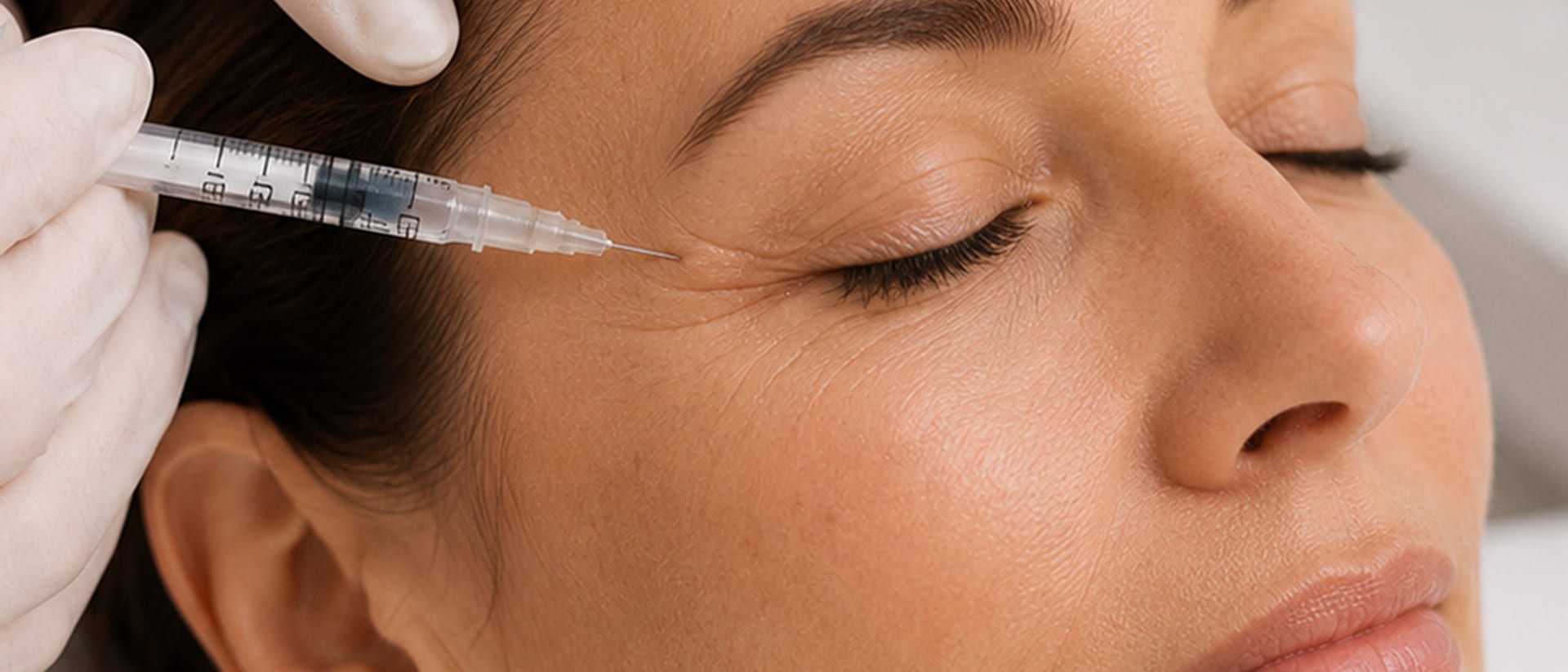
If you cover your mouth when you laugh, you already know the feeling. Your smile is fine — it just shows more gum than you would like. Gummy smile botox is one of the simplest treatments in facial aesthetics, and one of the most frequently misapplied, because it only addresses one of several possible causes. This article explains what actually creates a gummy smile, when botox helps, what a natural result looks like, and who should be told no.
What a gummy smile is, and what causes it
A gummy smile means an unusually large band of gum tissue is exposed above the upper teeth when you smile. Clinicians generally describe more than about 3 mm of visible gum as noticeable. It is a variation in appearance, not a medical problem, and it needs treatment only if it bothers you.
Here is the part most online content skips. The same look can come from very different sources, and botox does not answer all of them. The main causes:
- Muscular: The muscles that lift the upper lip work harder than average, pulling the lip higher than it needs to go. This is the group botox is designed for.
- A short or thin upper lip: The lip simply does not have enough length to cover the gums during a full smile. Botox may help partially if there is also a muscular component.
- Skeletal (vertical maxillary excess): The upper jaw is long in the vertical dimension. This is bone structure. Relaxing a muscle will not change it, and honest assessment here points toward orthodontics or maxillofacial evaluation.
- Gingival (altered passive eruption, gum overgrowth): Excess gum tissue covers part of the tooth. The answer belongs to dentistry, not to injectables.
Sorting out which one you have is the entire consultation. Botox changes muscle pull. It does not change bone, lip length, or gum level.
How botox helps
In a muscle-driven gummy smile, the logic is straightforward. The elevator muscles of the upper lip — chiefly the levator labii superioris alaeque nasi and neighboring fibers — converge near the base of the nose. Botulinum toxin, placed there in very small doses, temporarily reduces nerve-to-muscle signaling. The muscle pulls a little less, the lip rises a little less, and less gum shows when you smile.
What to expect in practice:
- The appointment takes minutes. The needles are very fine and anesthesia is usually unnecessary.
- The dose is markedly lower than in other facial areas. This region is dose-sensitive; restraint is a requirement, not a stylistic preference.
- Onset is typically 3-7 days, with the result settling around two weeks.
- Duration averages 3-4 months, varying with muscle strength, metabolism, and how expressively you use your face.
- The effect is temporary. As it wears off, the muscle returns to its baseline.
For patients traveling to Istanbul, one practical note: because the result takes about two weeks to settle and may need a small adjustment, plan the timing around any event rather than booking a few days before it.
What a natural result looks like
The goal is not to eliminate gum display. It is to soften the smile so the gum line falls into a range that no longer draws your own attention. Your smile should keep its width, its warmth, and its small asymmetries, because those are yours.
A well-planned result generally means:
- The smile still looks full and genuine; the upper lip simply lifts a little less.
- Speech, eating, and drinking are unaffected.
- People notice that you look good, not that you had something done — the core of a natural aesthetic approach.
Overtreatment or misplaced injection is what produces the results people fear: a flattened upper lip, an asymmetric or lopsided smile, a lip that seems reluctant to move, or, rarely, temporary difficulty with certain sounds. None of this is permanent — it resolves as the toxin wears off — but it can be uncomfortable for a few months. That is the real argument for conservative dosing and an injector who treats this area regularly.
Who this treatment is not for
The limits deserve to be stated plainly:
- Anyone whose cause is primarily skeletal. With vertical maxillary excess, relaxing the lip elevators produces little meaningful change. Offering botox anyway sets up a disappointment that was predictable from the first exam.
- Anyone whose cause is gingival. Gum overgrowth or altered passive eruption calls for a periodontal or dental assessment first.
- Standard botox contraindications: pregnancy and breastfeeding, active infection at the injection site, known hypersensitivity to botulinum toxin, and neuromuscular conditions such as myasthenia gravis. See who should avoid botox for the fuller picture.
- People whose work depends on precise lip control — singers, wind instrument players, professional speakers. The risk-benefit conversation here is different and should be had before, not after.
- Anyone expecting zero gum display. No physician can promise a smile to the millimeter, and any clinic that does is selling rather than assessing.
Mixed causes are common. Someone may have both a mildly overactive lip elevator and a naturally short lip; botox will improve the picture without completing it. Saying so at the start is better than discovering it at week two.
Frequently asked questions
Will gummy smile botox change how I smile? When the dose is small and correctly placed, the intent is to soften how far the upper lip lifts, not to alter the character of your smile. The amount used in this area is much lower than elsewhere on the face. Results still vary between individuals, and suitability can only be determined in person.
How long does it last, and is there a permanent option? The effect typically lasts around 3-4 months, after which the muscle regains its strength and treatment can be repeated. Botox is not a permanent solution. Where the underlying cause is skeletal, longer-lasting approaches fall under orthodontics or jaw surgery, not injectables.
How do I know whether I am a candidate? The cause has to be identified first: muscle, lip length, bone, or gum tissue. A consultation assesses your smile dynamics at rest and in full animation, and a dental or orthodontic opinion may be recommended alongside it.
If your smile is something you find yourself hiding, a consultation can identify the actual cause and whether botox is the right tool for it.
This content is for informational purposes only and does not replace a medical consultation.