6 min read
Who Should Avoid Botox?
Who should avoid Botox? An honest look at absolute contraindications, medications that interact with it, and why every patient is assessed individually.
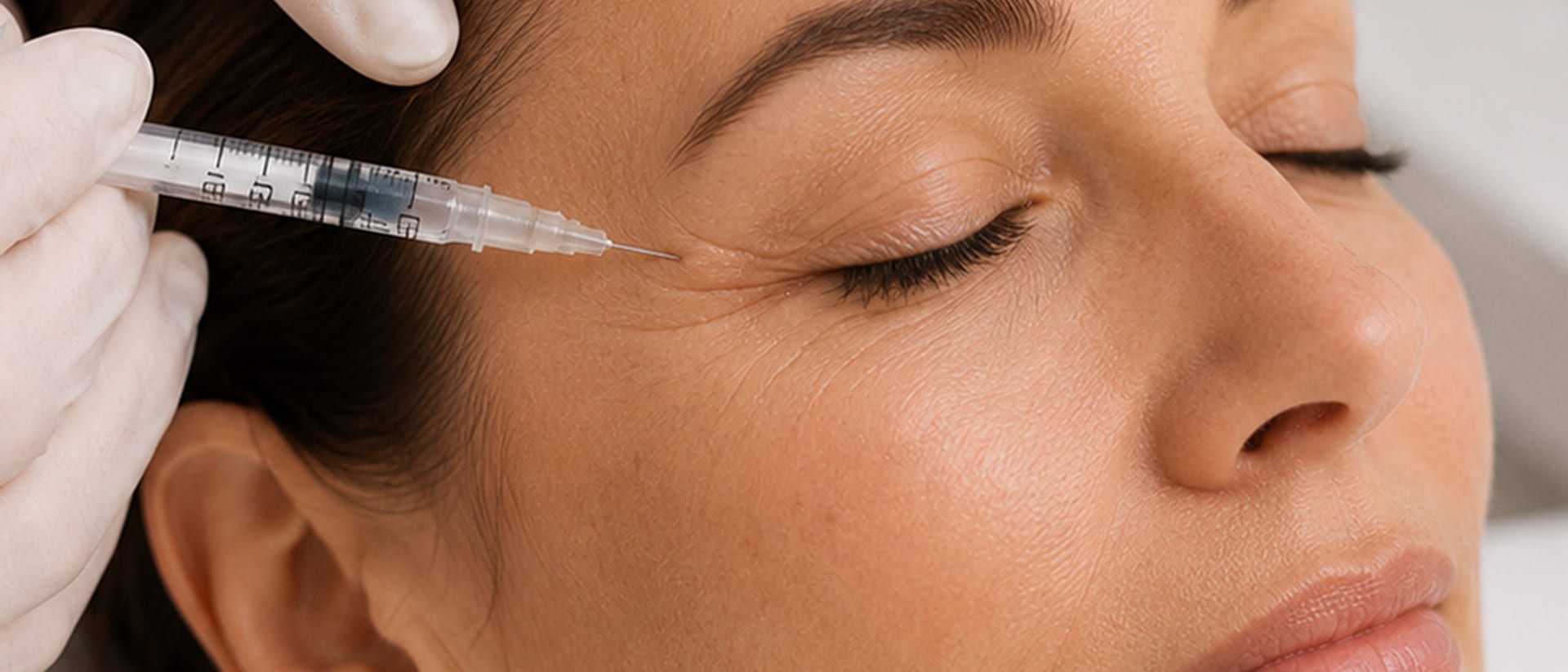
Most articles about botulinum toxin focus on what it can do. The more useful question, and the one a good consultation starts with, is the opposite: who should avoid Botox altogether? If you are researching treatment before traveling to Istanbul, this matters even more, because a screening conversation should happen before you book anything. Below are the absolute contraindications, the situations that call for caution, and why no checklist replaces a proper assessment.
Absolute contraindications
In some situations botulinum toxin is simply not given, regardless of how much a patient wants the result. These are medical boundaries, not preferences.
- Pregnancy and breastfeeding. There is no adequate safety data for botulinum toxin in pregnancy or lactation. An elective cosmetic treatment should not carry an unknown risk, so treatment is postponed.
- Neuromuscular disorders. Conditions that affect nerve-to-muscle signaling, such as myasthenia gravis, Lambert-Eaton syndrome and amyotrophic lateral sclerosis (ALS), can make patients unusually sensitive to the toxin, with muscle weakness spreading beyond the intended area. These are recognized contraindications.
- Active infection at the injection site. Inflamed acne, an active skin infection or a broken skin barrier in the treatment area means the appointment is postponed until the skin has settled. Injecting through infected tissue risks carrying it deeper.
- Known allergy to the product or its components. A previous allergic reaction to a botulinum toxin product, or a known allergy to an ingredient such as the human albumin used in some formulations, rules the treatment out.
Separately, any uncontrolled systemic illness or an active general infection is a reason to delay elective treatment of any kind. General health always comes first.
Relative situations that call for caution
A relative situation does not mean "never." It means the decision needs more care, the dose may need adjusting, or the timing may need to change. Only the physician examining you can make that call.
Medications. Some drugs increase the effect of the toxin or raise the risk of bruising:
- Aminoglycoside antibiotics and certain other antibiotics can interfere with nerve-to-muscle transmission and amplify the toxin's effect.
- Muscle relaxants and some medications used in myasthenia gravis may interact.
- Blood thinners and antiplatelet drugs (warfarin, direct oral anticoagulants, aspirin) make bruising more likely. These are never stopped without the approval of the doctor who prescribed them; accepting a higher chance of bruising is usually the safer trade.
- Supplements such as fish oil, ginkgo and high-dose vitamin E can also increase bruising.
Other points that change the plan:
- Bleeding disorders. A clotting problem raises the risk of bruising and hematoma, so treatment is planned with input from your hematologist.
- Autoimmune conditions. Many well-controlled autoimmune diseases are not an absolute barrier, but elective treatment is deferred during an active flare.
- Existing eyelid droop or brow asymmetry. Pre-existing ptosis can become more visible after forehead treatment. This does not rule the treatment out; it means the plan and the dose have to account for it.
- Previous surgery or altered anatomy in the area. Muscle structure may not behave as expected, so injection points and dosing are adapted.
- Unrealistic expectations. Not a medical contraindication, but a valid reason for a physician to say "not now." Our article on botox myths covers the most common misconceptions.
Age on its own is not a contraindication. In younger patients the decision depends on muscle activity and actual need, and in older patients the result depends more on skin quality than on the muscle alone.
Why every patient is assessed individually
Botulinum toxin temporarily reduces muscle activity. The same number of units produces different results in two different people, because muscle strength, muscle bulk, expression habits, skin thickness and bone structure are individual. This is why a dosing chart you found online does not belong to you.
The lists above should not be read as a form you tick off alone. In a consultation the questions that actually decide the outcome are:
- What medications, supplements and herbal products are you taking?
- Do you have any known neurological, autoimmune or bleeding disorder?
- Is there any chance you are pregnant, or are you breastfeeding?
- Have you had botulinum toxin before, and how did you respond to it?
- Is there an active skin problem, infection or recent procedure in the area?
For international patients there is one extra point worth planning for. If you are traveling to Istanbul, this screening should happen before you fly, not on the day of treatment. It is also sensible to allow a few days between treatment and your return flight, so that any asymmetry can be reviewed and, if needed, adjusted at a follow-up.
Two things are worth saying plainly. First, no physician can guarantee a specific result or zero risk; what a physician can do is reduce risk through careful patient selection, conservative dosing and an honest conversation. Second, the safety of an injectable depends as much on who performs it and under what conditions as it does on the patient's suitability, which we discuss in is medical aesthetics safe. If you are considering first-time botox, the right starting point is an assessment, not an appointment for injections.
Frequently asked questions
I had Botox before I knew I was pregnant. What should I do? Tell your obstetrician and let them review it with you. Injected cosmetic doses are generally considered to stay localized, but because safety data in pregnancy is insufficient, treatment is not recommended. The right step is a calm conversation with the doctor following your pregnancy rather than any action on your own.
Can I have Botox while taking antibiotics? It depends on the antibiotic and why you are taking it. Aminoglycosides and some other antibiotics can amplify the toxin's effect, and if you are being treated for an active infection, elective treatment is postponed anyway. Always name the medication during your consultation.
I have an autoimmune condition. Is Botox off the table? Usually not. Many well-controlled autoimmune conditions are not an absolute barrier. The clear contraindications are disorders of nerve-to-muscle transmission such as myasthenia gravis. The decision depends on your specific condition, how active it is, and what medications you take, and it is made at examination.
If you would like to know whether treatment is appropriate for you, a consultation is the place to review your medications, medical history and expectations together.
This content is for informational purposes only and does not replace a medical consultation.