
6 min read
Under-Eye (Tear Trough) Filler Explained
What tear trough filler is, who it suits, who it does not, and why not every dark circle needs filler. Tyndall effect and regenerative options explained.
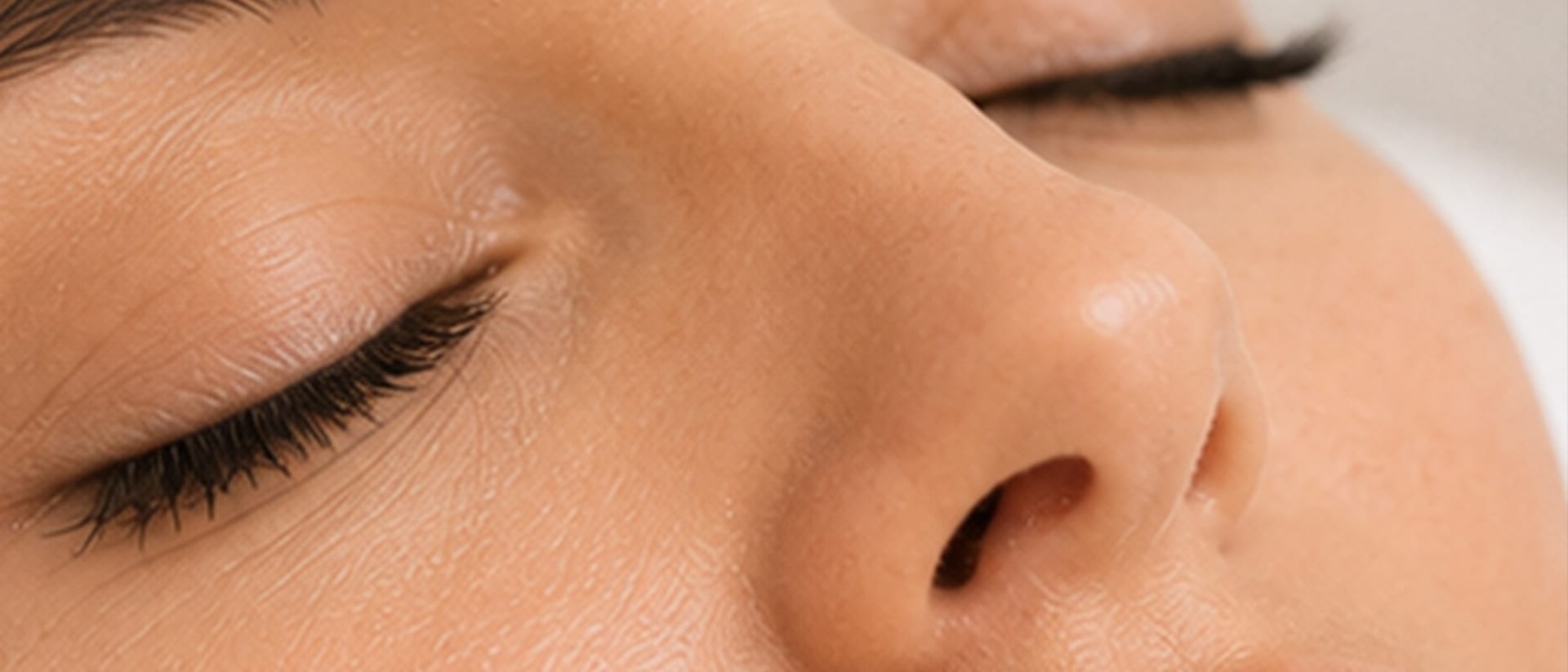
You slept eight hours and still look tired. That gap between how you feel and how you look is why tear trough filler is one of the most searched treatments in facial aesthetics, and also one of the most misunderstood. The under-eye is the thinnest, least forgiving area of the face, and not every dark circle belongs to filler. This article covers the anatomy, the three causes of under-eye shadows, who should say no, and the safer alternatives.
What the tear trough actually is
The tear trough is the groove where the soft tissue under the eye meets the cheekbone. In a younger face, the transition from lower eyelid to cheek is continuous. Over time, and in some people much earlier because of bone structure, the fat support around the eye socket thins, the midface loses volume, and that transition turns into a small step.
That step catches light. Instead of reflecting light back, it casts a shadow, so the area reads as dark even when skin color is completely normal. Tear trough filler addresses that specific problem: it does not lighten skin, it restores support so light can bounce off the area again.
The products used are the softest members of the dermal filler family: low-density hyaluronic acid gels designed for thin skin, placed deep and close to the bone. Results last around 9 to 12 months on average, varying between individuals and products.
Three different causes of dark circles
The most common mistake here is injecting before asking where the darkness comes from. Shadows that look identical in the mirror can have at least three separate causes, and only one of them responds to filler.
- Pigment-related. The skin itself is genuinely darker. Genetics, sun exposure, chronic rubbing, or skin type all play a role. If you gently stretch the skin and the darkness stays, pigment is likely involved. Filler changes nothing here, and adding volume can make the pigmentation more noticeable.
- Vascular. Very thin skin lets the underlying blood vessels show through as a blue or purple tone. Poor sleep, allergies, and smoking make it more visible. Filler may mask a little of it, but volume is not the underlying problem, and in very thin skin a poorly placed filler can make things worse.
- Structural (hollowing). This is the true candidate for tear trough filler. Skin color is normal; the darkness is only a shadow cast by the groove. If the shadow softens under different lighting or when you tilt your face upward, the cause is probably structural.
Most people have some combination of all three, which is exactly why the assessment starts by separating them. When pigment dominates, the priority is skin care and sun protection. When the picture is vascular or skin-quality driven, the regenerative approaches used for dark circles make more sense. Filler earns its place only when there is a real volume deficit.
Who tear trough filler is not for
Under the eye, choosing not to inject is often the better medical decision. Filler is generally unsuitable when:
- You are prone to puffiness. If your under-eyes swell in the morning, after salty food, or after poor sleep, the water-binding nature of hyaluronic acid can amplify that tendency and leave a persistent bag-like fullness.
- You have true fat herniation (eye bags). Here the problem is tissue pushing forward, not a hollow, so adding volume increases the fullness. This usually calls for a surgical opinion rather than an injection.
- Your skin is extremely thin or translucent. The risk of the product becoming visible is high.
- You expect pigmentation to disappear. Filler is not a brightening treatment.
- There is active skin infection, uncontrolled systemic illness, pregnancy, or breastfeeding.
Suitability cannot be judged from a photo. Skin thickness, fluid retention, midface support, and eyelid structure only become clear on examination. In some people, rebuilding cheek support without touching the under-eye at all reduces the shadow noticeably.
Risks, including the Tyndall effect
As with any injection, temporary redness, mild swelling, and bruising can occur, usually settling within a few days. The risks specific to this area are worth knowing before you decide:
- Tyndall effect. When hyaluronic acid is placed too superficially, thin skin scatters light through the gel and the area takes on a bluish-gray cast. The irony is unpleasant: a treatment meant to reduce darkness can create a new, more persistent discoloration.
- Prolonged swelling. Lymphatic drainage here is slow, so puffiness can last weeks rather than days.
- Irregularity or asymmetry. Too much product shows up as lumps and ridges.
- Rare but serious vascular complications. The eye region is vascularly sensitive, which is why the injector's anatomical knowledge is a requirement, not a preference.
The reassuring part: hyaluronic acid products can be dissolved with hyaluronidase when needed. Tyndall discoloration and overfilling are, in most cases, reversible. Even so, the sensible approach remains starting conservatively and topping up later if necessary.
Regenerative alternatives
If filler is not appropriate, or would not be enough on its own, treatments that target skin quality rather than volume become relevant. These do not fill a hollow; they aim to improve the skin's own thickness, hydration, and the way it reflects light.
- Polynucleotide (salmon DNA) treatments, often discussed for supporting tissue quality in thin under-eye skin.
- Exosome and mesotherapy protocols, planned as a series of sessions.
- PRP, using a preparation derived from your own blood.
- The unglamorous foundation: sun protection, sleep, allergy control, and not rubbing your eyes. No injection replaces these, or can ignore them.
These options work gradually and will not deliver the immediate volume change filler gives. In exchange, they offer a safer route for people with puffiness or very thin skin.
Frequently asked questions
How long does tear trough filler last? Depending on the product and individual metabolism, results last around 9 to 12 months on average. This is an average, not a promise — some people see a shorter duration and others considerably longer.
Will I be swollen afterward? Mild swelling and occasionally bruising can be expected, usually settling within a few days. Because lymphatic drainage under the eye is slow, puffiness may linger longer here than elsewhere. Wait a few weeks before judging the result.
Is there an option other than filler? Yes. If the shadow comes from pigment or thin skin rather than hollowing, regenerative treatments aimed at skin quality may be more appropriate. The right choice can only be determined through examination.
To understand which cause is behind your under-eye shadows, and whether filler is appropriate at all, you can book a consultation at our Istanbul practice.
This content is for informational purposes only and does not replace a medical consultation.