6 min read
Botox for Excessive Sweating (Hyperhidrosis)
How Botox for sweating works, which areas it treats, how long it lasts and who should avoid it. A clear guide for patients considering Istanbul.
Excessive sweating is rarely about vanity. It is about keeping a spare shirt in your bag, hesitating before a handshake, or planning your wardrobe around what will not show a mark. Botox for sweating is a medical use of botulinum toxin aimed at exactly that problem. This guide explains what hyperhidrosis is, how the injections work on sweat glands, which areas are treated, how long results tend to last, and who is not a candidate.
What hyperhidrosis actually is
Hyperhidrosis means the body produces far more sweat than it needs to regulate its temperature. It can happen in a cool room, without exercise, and without an obvious trigger. Clinically it is divided into two categories, and the distinction matters.
- Primary hyperhidrosis: There is no underlying illness. It often begins in adolescence or early adulthood, affects specific areas (underarms, palms, soles, scalp), is usually symmetrical, and typically eases during sleep.
- Secondary hyperhidrosis: The sweating is a consequence of another condition or a medication. Thyroid and hormonal changes, menopause, certain infections, metabolic conditions and some drugs can all be involved. Here the sweating is more often generalized across the body and may continue at night.
If the pattern points toward a secondary cause, the priority is not suppressing the symptom but investigating what is behind it. That is why any responsible plan begins with a history and an examination rather than a booking form.
How Botox for sweating works
Sweat glands do not act on their own. They fire when a nerve ending releases a chemical messenger called acetylcholine. Botulinum toxin temporarily blocks that release. With the signal interrupted, the gland is not switched on, and sweat production in the treated area drops noticeably.
Two things follow from this mechanism:
- The effect is local. Only the injected area is affected; the rest of the body keeps sweating normally to regulate temperature.
- The effect is temporary. Nerve endings gradually re-establish signaling, and sweating returns over time.
The molecule is the same one used for expression lines, only the target tissue differs. We cover the underlying mechanism in more detail in what is Botox, and another non-cosmetic use of the same molecule in masseter Botox.
Which areas are treated
Treatment is planned around where the sweating actually interferes with daily life. The most common areas are:
- Underarms (axillae): The most frequently treated area and generally the most comfortable. Chosen when staining, odor concerns and mid-day shirt changes are the main complaints.
- Palms: Considered when sweating makes handshakes, writing, keyboards, touchscreens or a steering wheel difficult. The palms are more sensitive, so comfort measures such as cooling or a topical anesthetic are planned in advance.
- Soles of the feet: Relevant when slipping inside shoes and odor are the issue.
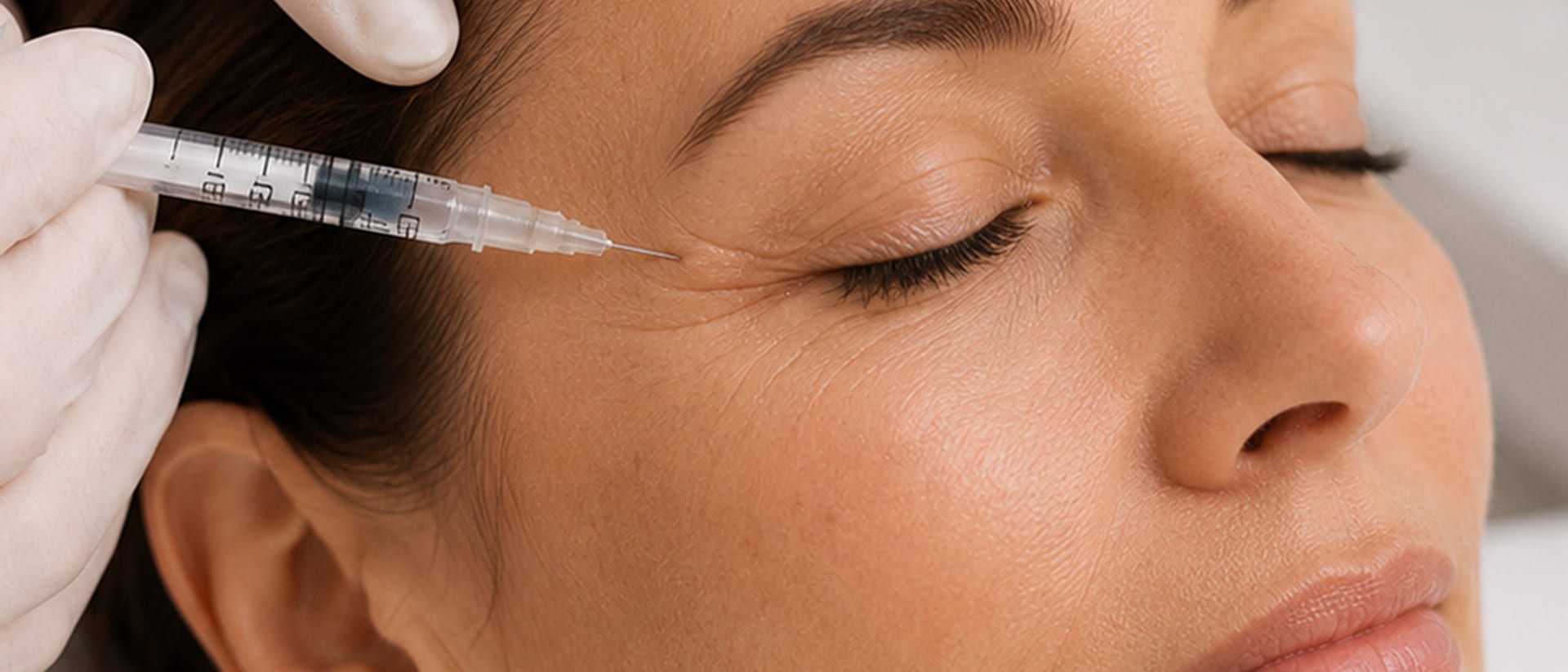
The product is placed superficially, into many small points distributed across the mapped area. The appointment itself is short. Most people return to normal activity the same day, while avoiding intense exercise, hot showers and saunas for the first hours.
Results are not immediate. A reduction in sweating is usually noticed within a few days, with the full effect settling in around two weeks. That timeline is worth knowing if you are planning around an event, a season or a trip.
How long it lasts, and repeat treatments
The effect is not permanent. On average, patients are told to expect somewhere between a few months and roughly a year, though the range genuinely varies from person to person. The treated area, individual metabolism, the severity of the sweating and the season all influence duration. Underarm treatment is generally accepted to last longer than palms.
When the effect fades, treatment can be repeated. A practical approach for many people is to plan ahead of the period when sweating bothers them most — a warm season, a demanding work calendar, a wedding. There is no fixed schedule that applies to everyone; the interval is decided with your doctor based on how you responded. Dose and number of injection points are likewise individual and can only be determined at an examination.
Who should not have this treatment
Botox for sweating is not suitable for everyone. Treatment is avoided or postponed in situations including:
- Pregnancy and breastfeeding.
- Known hypersensitivity to botulinum toxin or its components.
- Neuromuscular junction disorders such as myasthenia gravis or Lambert-Eaton syndrome.
- Active infection or a skin lesion in the area to be treated.
- Use of certain medications that can amplify the neuromuscular effect (some antibiotics, for example) — which is why a full medication list is part of the consultation.
- Generalized, recently started or night-time sweating that has not been investigated. In that picture, the underlying cause comes first.
Planning treatment in Istanbul
Dr. Burak Gümüşçü's practice is in Yeşilköy/Bakırköy, on the European side of Istanbul and close to the airport, which makes the visit straightforward for patients arriving from abroad as well as those living locally. Practically, this is a treatment that fits a short stay: a consultation and examination first, the injections themselves in a short appointment, and no downtime that would keep you indoors.
What cannot be shortened is the assessment. Whether Botox is appropriate at all, which area to map, and what dose to use are decisions made in person. If you are traveling, allow time for the consultation rather than treating it as a formality. You can read what to expect in your first consultation, and more about the practice and its location in medical aesthetics in Istanbul.
Frequently asked questions
Will Botox stop my body from sweating altogether? No. The effect is limited to the treated area and aims to reduce sweat production there. The rest of your body continues to sweat normally to regulate temperature.
Is the treatment painful? Very fine needles are used and the injections are superficial, so it is generally well tolerated. For more sensitive areas such as the palms, comfort measures like cooling or a topical anesthetic can be planned.
How soon can I fly or return to work? Most people resume normal activity the same day, avoiding intense exercise, hot showers and saunas for the first hours. Your doctor will give you aftercare guidance specific to the area treated.
If excessive sweating is affecting your daily life, you can schedule a consultation to assess the cause and discuss whether this approach is right for you.
This content is for informational purposes only and does not replace a medical consultation.